
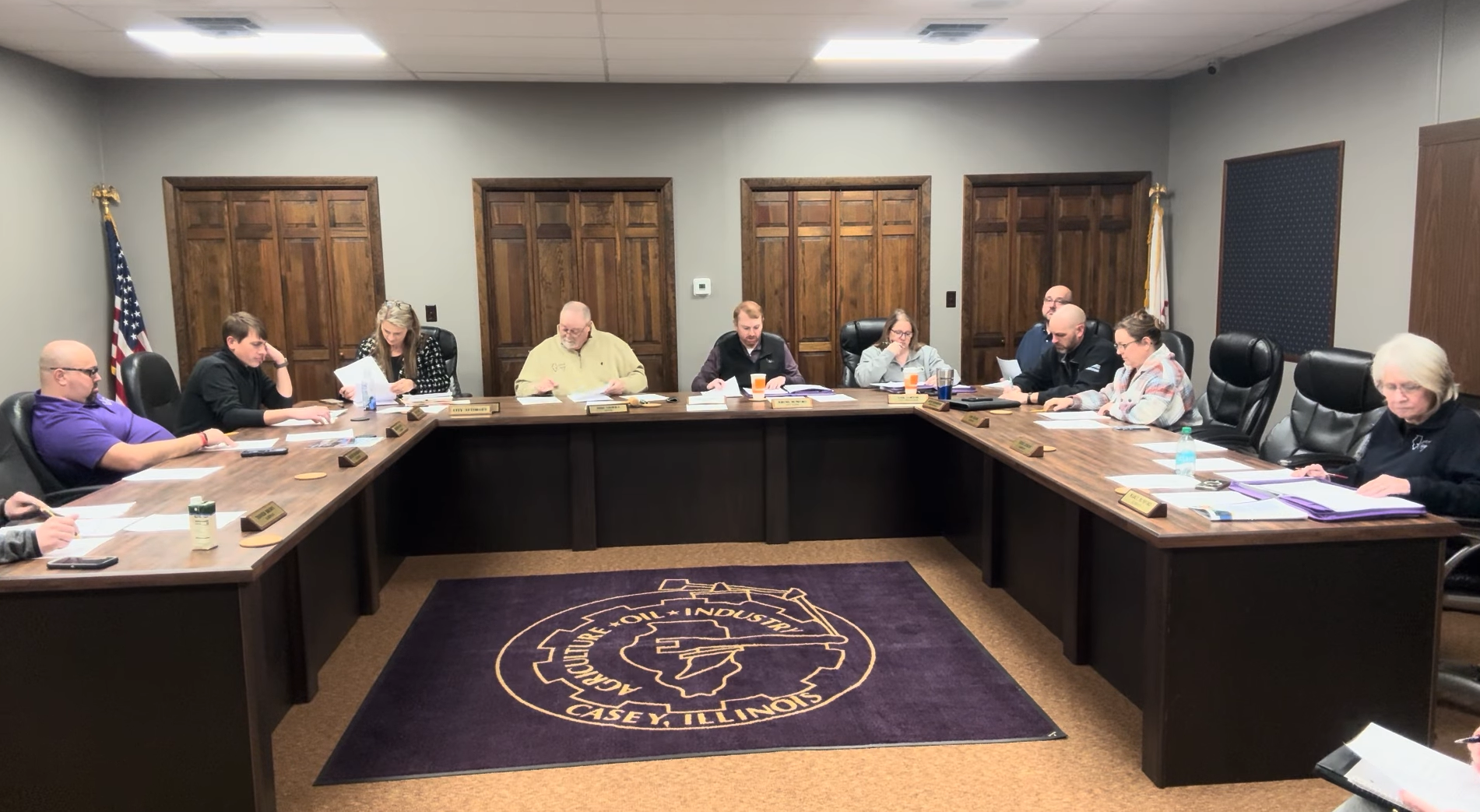
Casey Council Implements Municipal Grocery Tax to Replace State Levy
Casey City Council Meeting | March 2, 2026
Article Summary: The Casey City Council voted to implement a 1% Municipal Grocery Retailers’ Occupation Tax to replace the grocery tax recently eliminated by the State of Illinois. The new tax will take effect on July 1, 2026, with revenue directed to the city’s corporate fund.
Grocery Tax Ordinance Key Points:
-
Tax Rate: A 1% tax on gross receipts from the sale of groceries.
-
Reasoning: The State of Illinois eliminated the state-level 1% grocery tax and authorized municipalities to implement their own to recapture the revenue.
-
Effective Date: July 1, 2026.
-
Vote Result: Passed in a 3-1 split vote.
The Casey City Council on Monday, March 2, 2026, approved Ordinance #610, establishing a local tax on grocery sales to maintain revenue levels following changes in state legislation.
Mayor Mike Nichols introduced the measure, explaining that the State of Illinois had stopped the collection of the 1% food tax as of January 1, 2026, but provided municipalities the authority to create their own ordinance to keep that 1% revenue stream intact.
“The state just passed it on to the municipalities and said, ‘You guys do it yourselves instead of through the state,'” Nichols told the Council. He noted that while the city had not initially discussed the tax because Casey lacks a large chain grocery store, the tax applies to grocery products sold at other retailers, such as convenience stores and butcher shops.
According to the ordinance included in the agenda packet, the tax applies to “all persons engaged in the business of selling groceries at retail in the municipality.”
During discussion, Alderman Tanner Brown asked for clarification on where the generated funds would be allocated. Nichols confirmed the revenue would go into the corporate fund, which supports general city operations including the police department.
“I don’t anticipate it being much, but still, if it’s enough to help with some things through corporate… it’s not adding more. It’s picking up what [was there],” Nichols said.
The Council discussed the timeline for implementation. The Ordinance Committee reported that because the January 1 deadline was missed, the tax cannot go into effect until July 1, 2026.
The measure passed in a split 3-1 vote. Aldermen Jeremiah Hanley, Marcy Mumford, and Lori Wilson voted in favor. Alderman Tanner Brown voted against the measure. Aldermen Steve Jenkins and Carlene Richardson were absent.
Showers And Thunderstorms Likely then Chance Showers And Thunderstorms
Latest News Stories

Chicago aldermen pass revenue package, business groups express concern

DOJ lawsuit against Illinois draws support from election integrity advocates

Bears threaten move to Indiana after property tax break bill frustrations

Illinois legislator, physician discusses vitamin K refusals amid new study

WATCH: Commission makes ICE accountability referral; Rep says Pritzker wrong on prices

Illinois quick hits: DOJ sues over voters lists; CTA security surge

BREAKING: Milwaukee judge guilty of felony obstruction during ICE arrest

GOP opposes California tuition aid for Illegal Immigrants

Texas reps launch new Sharia Caucus

Legislator demands DCFS set record straight on child welfare interns

Illinois energy costs expected to increase as Pritzker considers bill

Plaintiff in redistricting lawsuit predicts Supreme Court fight


