Chicago suit vs oil cos. may yet survive SCOTUS ruling, judge hints
Even as the Supreme Court considers a Colorado case that oil companies believe will decide if city and state governments can sue oil companies over emissions allegedly tied to climate change, a Cook County judge has signaled he may allow the city of Chicago to continue at least a portion of its lawsuit against oil companies, no matter what the Supreme Court decides in the Colorado case.
Cook County Circuit Judge Allen P. Walker has granted much of a request from energy producers Chevron, Shell, B.P., ExxonMobil and others to put much of Chicago’s “climate disinformation” lawsuit against the companies on hold.
That ruling had come about a month after attorneys for the energy companies had filed a motion requesting a stay in the proceedings.
The oil companies based their motion to stay entirely on the U.S. Supreme Court’s decision to take up a case out of Boulder, Colorado, centered entirely on one overarching question:
Whether federal law prohibits cities, like Chicago, Boulder and a growing number of others, from using accusations of alleged “deception” over climate change to use municipal ordinances and state laws to extract potentially huge paydays from the companies.
The city and the oil companies have faced off in court since 2024, when Chicago joined with a group of trial lawyers to file a lawsuit seeking to make Chevron, BP and other petroleum producers and distributors pay for allegedly misleading consumers and the public for decades about the alleged climate altering affects of using oil and gas products in transportation and many other economic sectors.
The lawsuit particularly takes aim at what it calls “disinformation” from the oil companies, which the city claims has misled consumers into continuing to use the products for decades after the energy companies allegedly knew of the supposed harms caused by the use of their fuels.
The city’s lawsuit largely follows a path blazed by other local government lawsuits against the same energy companies, as well as by earlier litigation against tobacco companies, pharmaceutical companies and others who have supplied many of the products common to American life.
The city is joined in the action by trial lawyers from the firms of DiCello Levitt LLP, of Chicago, and Sher Edling LLP, of San Francisco.
The energy companies have succeeded in snuffing out a number of such municipal and state-level “climate disinformation” lawsuits, notably in Pennsylvania, New York, Maryland and New Jersey.
In those jurisdictions, judges have determined the cases to be improper attempts to use lawsuits to regulate federally controlled emissions standards.
However, in other locales, the cities and other local governments have been allowed to move forward with their cases.
Notably, the state Supreme Courts of Colorado and Hawaii have allowed the actions to move ahead.
Famously, in May 2025, the Colorado state high court ruled a lawsuit led by the city of Boulder could continue because state law-based “nuisance” and consumer protection-based “disinformation” claims are not preempted by the federal Clean Air Act. They found the lawsuits aren’t seeking to restrict or regulate emissions, but rather seek only to make the companies pay enormous sums of money for producing and selling the products that cause the emissions and the allegedly related climate change problems.
The energy companies, however, have essentially called that finding a legal hair-splitting distinction without a difference. They argue Democrat-dominated cities and state governments are attempting to use such lawsuits and the accompanying threat of large and potentially crippling court-ordered payments or settlements to sidestep federal regulation under the Clean Air Act and force undemocratic changes in the behavior of energy companies and consumers, achieving national energy policy and emissions goals desired by left-wing activists and politicians.
With courts divided on that question, the U.S. Supreme Court in February agreed to take up the Boulder case. When the high court delivers a ruling in the case, justices could deliver a final answer on whether Boulder and other cities can advance such lawsuits.
In the Chicago case, the companies argued a ruling in their favor from the Supreme Court should effectively end Chicago’s case, “because it is undisputed that all of Plaintiff’s claims are premised on, and seek damages for, the cumulative impact of ‘global warming’ as a result of historical emissions’ throughout the country and world.”
In response to that motion, however, the city and its trial lawyer allies disputed those “undisputed” claims.
In their motion, the city and its lawyers argued proceedings in the case should not be paused because the outcome of the Boulder case may not favor oil companies as much as they claim.
But the city also argued the Boulder case will not apply at all to two of the key counts in their complaint, namely, counts under the city’s ordinance forbidding alleged “deception” by the oil companies.
Specifically, the city asserted those claims aren’t based on any assertions of climate harms from emissions, but rather center on assertions that the city can make the energy producers pay potentially massive civil penalties and other damages for “deception inside City limits without regard to whether the deception increased emissions or worsened climate harms.”
The city said those counts are based on its claims the companies allegedly misled the public about the climate impact of the fuels they sold, and don’t seek any payment for the actual alleged harms themselves.
While the oil companies assert such arguments amount to “legal hairsplitting,” Judge Walker sided with the city on those points.
While halting most discovery and other proceedings related to most of the city’s claims, the judge said he would allow the city to continue with the portions of its lawsuit the city argued centers on “pure consumer protection claims that do not seek relief for emissions-related injuries.”
The judge appeared to agree with the city that whatever the Supreme Court decides in the Boulder case it would likely not affect those portions of Chicago’s case, essentially finding they won’t be preempted or precluded by federal law.
Judge Walker did not explain his ruling in a written decision, but specifically exempted the claims related those counts, known as Counts IX and X in the city’s complaint, from the stay order.
In response to a question from The Cook County Record about the decision, a spokesperson for the City of Chicago’s Department of Law said about Judge Walker’s ruling: “Discovery will continue under the two statutory consumer protection claims under the Municipal Code of Chicago. These claims are beyond the reach of the questions currently under review at the Supreme Court.”
The oil and gas companies are represented in the action by attorney Patricia Brown Holmes and others with the firms of Riley Safer Holmes & Cancila, of Chicago; Gibson Dunn & Crutcher, of Los Angeles, Washington, D.C., New York and San Francisco; Susman Godfrey LLP, of Houston; and Stern Kilcullen & Rufolo, of Fordham Park, New Jersey.
The city is represented by attorney Chelsey B. Metcalf, and others with the city’s Department of Law; attorney Daniel R. Flynn, and others with the DiCello Levitt firm; and Matthew K. Edling and Victor M. Sher, and others with the Sher Edling firm.
The Sher Edling firm has also served as counsel on dozens of virtually identical climate-related lawsuits against the oil and gas industry throughout the country. Published reports indicate Sher Edling has received millions of dollars in funding from a dark money group backed by billionaires, known as the Collective Action Fund for Accountability, Resilience and Adaptation.” That funding has drawn scrutiny from members of Congress, who have noted it pays for the firm’s lawsuits on behalf of local governments aimed at bankrupting the nation’s oil and gas companies.



Chance Showers And Thunderstorms
Latest News Stories
Casey City Council July 7 Meeting Briefs
Donna K. Wilson

Cooling Centers Available

No Carts in Fairview Park Walking Paths

Beauty around the Rocking Chair
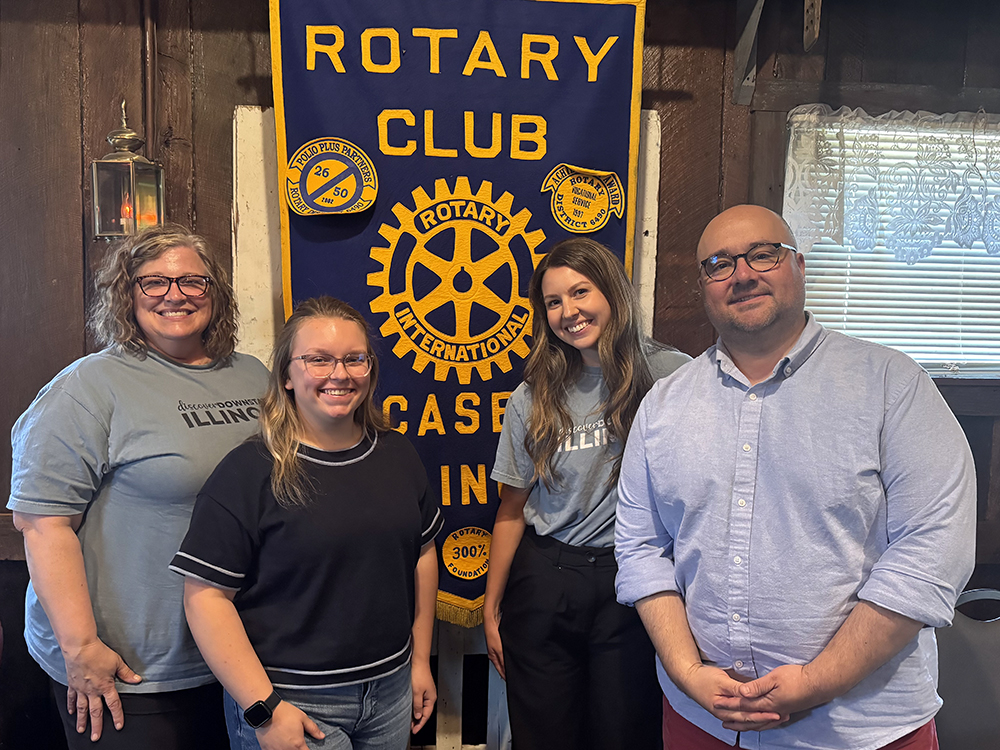
Rotary Hosts Discover Downstate Illinois Marketing Team
Julie Beth Redman

Julie Snyder Named Honorary Chairperson for 75th Casey Open
David Eugene Hawkins
Registration open now: ‘Pop On In’ to the 2025 CIA 5K Fun Run/Walk
Donald Lee “Don” Maxey
Keith Richard Wattleworth