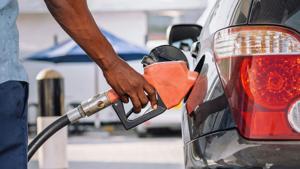
Professor: Surging gas prices will have long-term effects
(The Center Square) – A University of Chicago professor says the effects of high gas prices will ripple through the economy and change how people live.
AAA ranked Illinois as the eighth most expensive gas market last week, with the average price of regular unleaded hitting $4.86 a gallon and diesel topping $5.60.
The average Illinois price one year earlier was $3.40 for unleaded and $3.56 for diesel.
Professor Steven Durlauf, director of the Stone Center for Research on Wealth Inequality and Mobility at the University of Chicago, said higher gas and oil prices disproportionately affect modest and poorer families and ripple through the economy.
“When diesel prices go up the way they have, that increases transportation costs for vegetables and fruits, and that ends up showing up in the grocery stores as well. One can go across many, many different commodities in the economy and ask what the consequences are for their prices,” Durlauf told The Center Square.
Illinois Restaurant Association President and CEO Sam Toia said product costs for restaurants are up about 33 percent since the pandemic, but high gas prices might bring the number closer to 38%.
“And what does an independent restaurant owner-operator do? They have to raise their prices. When they raise their prices, they lose customers. When they lose customers, they’re going to lose a few more pennies and then they’re going to go out of business,” Toia told The Center Square.
Durlauf said higher prices for the production of goods and services also affect the labor market.
“You don’t see very many people quitting jobs to move elsewhere. New hiring opportunities seem to be frozen, etc. And all that matters as well because it’s one thing for prices to go up, it’s quite another if somebody loses their job or they’re fixed in their job and can’t find better opportunities,” Durlauf said.
Durlauf said higher commuting costs may affect relationships between employees and employers who want to reduce working from home.
“Firms, of course, have a lot of ability to force people to go to the office,” Durlauf said.
The surging gas prices may have long-term effects on business and consumer decisions.
Durlauf said oil price shocks in the 1970’s drove people to consider fuel economy and gas mileage when they purchased cars.
“I think the 2026 equivalent is going to be, this will increase the desirability people see for electric vehicles,” Durlauf said.
Even if the Strait of Hormuz opens and gas and oil prices drop quickly, Durlauf said the events pump uncertainty into the system.
“People are making decisions on electric vehicles that are long run decisions. If you think that it’s likely that this is going to happen again, that’s an incentive to buy an electric vehicle beyond the day-to-day prices,” Durlauf said.






Mostly Sunny
Latest News Stories

U.S. jumping into action to assist Venezuela following massive earthquakes

Casey Awards Utility Line Boring Contract to B&T Drainage

Parents warned of YMCA camps’ transgender-inclusive policies for cabins, restrooms

Chicago’s potential ‘teen takeover’ solutions cost taxpayers

Congressional proposal aims at ‘loophole’ for ideology policies

Illinois Quick Hits: Opioid overdose deaths decline in Cook County

Los Angeles school board passes budget, limits screen time

WATCH: How data centers rescued a struggling central Washington community

Oppenheimer’s grandson supports nuclear energy bill

Trump expresses frustration with NATO as Rutte praises the president

Ex-fire chief sues Los Angeles mayor for defamation

Over $10 billion U.S. taxpayer dollars spent on improper SNAP payments in 2025