Judge says federal rule blocks Illinois from banning ‘swipe fees’
Federal law blocks the state of Illinois from prohibiting both banks from outside Illinois and payment card servicers, like Visa and Mastercard, from charging so-called “swipe fees” on sales taxes that are charged or gratuities added on when customers use a credit or debit card to make a purchase, a federal judge has ruled.
In her new ruling, U.S. District Virginia Kendall said a new rule instituted by federal banking regulators makes clear that Kendall’s earlier interpretation, that the payment network operators were somehow distinct from banks, and could be regulated under Illinois state law, was wrong.
She said bankers who challenged the Illinois law have “successfully demonstrated” that the same federal laws that block the state from regulating national banks or out-of-state banks also preempts the same kinds of regulations against so-called “payment card networks.”
The ruling was handed down June 1, hours after Illinois state lawmakers used some of the closing moments of the spring legislative session to extend the effective date of the provisions of the law known as the Illinois Interchange Fee Prohibition Act.
The law had been scheduled to take effect on July 1.
However, the fate of the law has been in question from the moment the Illinois General Assembly enacted the law in 2024 and banks moved swiftly to challenge the measure.
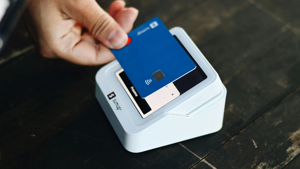
The law made Illinois the first state in the country to attempt to regulate so-called interchange fees, commonly known as “swipe fees.” The IFPA specifically sought to ban banks, card issuers or any other entity involved in electronic financial transactions made using credit or debit cards from tacking fees onto state or local sales taxes or gratuities that may be added onto a purchase.
The law was met with immediate legal challenges from banks and credit unions, along with other financial service providers, who argued the provision should be preempted by federal laws governing and providing protections to financial institutions against such state regulation of national commerce.
The banks won a preliminary injunction initially in 2025, leading Illinois Democrats to delay the effective date back to July 1.
But earlier this year, Kendall handed the state what appeared to be a key legal win. In February, Kendall ruled federal law may prevent the state from regulating national banks and banks based outside Illinois. But she said she believed that preemption did not extend to the card service providers who set the interchange fees.
“The thrust of (the federal law) is not to protect fees centrally established by a third-party company,” Kendall said in her February ruling.
In her February ruling, Kendall had also brushed aside warnings from the federal national banking regulator, the Office of the Comptroller of the Currency (OCC), that the state law represented an illegal extension of “bad policy.”
However, in April, about two months after Kendall’s first ruling and about two months before the state law was set to take effect, the OCC issued an interim final rule and order declaring banks based outside Illinois and anyone involved in processing payments for them weren’t obligated to follow Illinois’ law. The OCC said Illinois’ law not only directly conflicted with federal law, but “would create a complex, potentially unworkable, and destabilizing standard for national banks.”
The OCC noted the chaos and harm would be magnified were Illinois’ law allowed to stand and other states followed Illinois’ lead and enacted similar laws. Already, similar legislation has been passed in Colorado and Alabama, for instance.
On appeal in Illinois, the U.S. Seventh Circuit Court of Appeals tossed out Kendall’s ruling, and instructed her to take another look at the case, in light of the OCC’s rule.
In her new ruling, Kendall cast aspersions upon the OCC for intervening as it did in the matter.
But in the end, she said, the rule changed the legal calculus in the case showing that it was impossible for the state to impose a rule banning card payment network servicers from charging the fees without also imposing such a rule illegally upon national banks and other banks otherwise shielded by federal law from Illinois’ regulatory reach, as the banks had argued from the start.
With that bedrock legal question answered, Kendall further conceded the protected payment card networks, as well as their banking partners, would suffer immense costs in complying with a state law that was likely unconstitutional and illegal.
Kendall granted an injunction blocking the state from enforcing the provision.
In response to the ruling, the Illinois Retail Merchants Association, who had strongly supported the Illinois “swipe fee” law, called the new decision a “temporary setback.”
IRMA President and CEO Rob Karr noted Kendall’s ruling “highlights serious procedural and substantive concerns about how the federal rule was adopted and its scope, so this issue is far from settled.”
“We remain committed to pursuing meaningful swipe fee relief for consumers, neighborhood retailers, restaurants, and bars, and are actively evaluating additional legal avenues to protect them,” Karr said.
However, the group of banking and financial services organizations who together challenged the Illinois law, hailed the ruling.
In a joint statement, the American Bankers Association, Illinois Bankers Association, America’s Credit Unions and Illinois Credit Union League said:
“We welcome today’s ruling, which recognizes that federal law protects critical elements of the national payments system from conflicting state requirements. The court appropriately concluded that the Interchange Fee Prohibition Act cannot be applied to national banks, federal savings associations, payment networks as well as certain other financial services providers because it is preempted by federal law. The decision will spare millions of Illinois businesses and citizens from payment chaos.
“This decision is an important step toward preserving a consistent, nationwide framework for electronic payments. At the same time, it does not fully resolve the challenges created by this law. Even with this decision, credit unions and Illinois-chartered banks remain subject to IFPA, creating ongoing uncertainty and the risk of inconsistent treatment for parties in the same transaction.
“Electronic payments rely on a highly interconnected network that requires a uniform national standard. We will continue working through the courts and with policymakers to ensure that all participants in the payments system are treated consistently, so the customers they serve will also be protected from the harm IFPA will cause. We look forward to the Seventh Circuit’s review of this misguided law.”



Sunny
Latest News Stories
Trump gives boost to Lebanese relations; puts squeeze on Iran in the process

Illinois news in brief: State police use grant money to recover 342 stolen vehicles; State launches Blue Envelope program; Treasurer: State returned $307.8 million in I-CASH
Biden recordings case could head to U.S. Supreme Court

Pritzker touts climate, green energy record as capacity leaves, rates rise
Warren will campaign this weekend for El-Sayed in Michigan

Trump hits Canada with new tariffs Congress may be powerless to stop
Abbott directs healthcare, regulatory agencies to target birth tourism in Texas

Fugitive accused in $547 million Medicare fraud scheme captured

Ongoing border enforcement: Revocation of citizenship of convicted criminals

Minnesota wildfires prompt burning restrictions as air quality improves

Poll: Americans views of socialism little changed despite recent elections
Malliotakis: Commie Caucus is coming to Congress