
Bessent backs 3% deficit goal despite 5% budget forecasts
U.S. Treasury Secretary Scott Bessent pledged in two congressional hearings this week to cut the federal deficit to 3% of GDP, a target the government’s own budget projections do not currently support.
Bessent repeated the goal before both the Senate Finance Committee and the House Ways and Means Committee, telling lawmakers the administration could achieve “something with a three in front of it” by the end of President Donald Trump’s term.
The administration’s fiscal 2027 budget, however, projects deficits above 5% of GDP through 2029.
The Congressional Budget Office projected in February that the federal deficit will reach $1.9 trillion, or 5.8% of GDP, in fiscal year 2026 – and will not fall below 5.6% of GDP at any point over the next decade. Debt held by the public reached 101% of GDP, the highest level since World War II. Bessent told the House committee the deficit had fallen to 5.5% of GDP, a figure that Treasury has not publicly reconciled with CBO’s 5.8% projection for fiscal year 2026. Treasury did not respond to questions about the basis for Bessent’s 5.5% figure.
The federal government is projected to spend more than $1 trillion on interest payments alone in fiscal year 2026, more than all discretionary defense spending. By 2036, CBO projects annual interest costs will reach $2.1 trillion, approaching the total projected cost of all discretionary federal spending that year.
Maya MacGuineas, president of the Committee for a Responsible Federal Budget, said in a May 6 statement that $2 trillion deficits have become routine.
“Two trillion dollar deficits used to be unheard of, and then they only occurred during major recessions,” MacGuineas said. “It’s beyond scary that $2 trillion deficits are now the norm.”
A $2 trillion deficit, she noted, amounts to more than 6% of GDP – about double the 3% target Bessent has endorsed.
Despite those projections, a bipartisan group of House members has backed H.Res. 981, a nonbinding resolution that would set a congressional goal of reducing the deficit to 3% of GDP by 2030. The resolution has 20 cosponsors, evenly split between Republicans and Democrats, but has remained in committee without action since its introduction in January.
Rep. Lloyd Smucker, R-Pa., one of the resolution’s original cosponsors, raised it directly during Thursday’s House hearing, telling Bessent the measure has bipartisan support. Bessent has publicly endorsed the resolution and told the committee he left a career in finance partly out of concern about the nation’s debt trajectory.
H.Res. 981 was introduced Jan. 7 by Rep. Bill Huizenga, R-Mich., and Rep. Scott Peters, D-Calif., co-chairs of the Bipartisan Fiscal Forum, a House caucus focused on deficit reduction, along with Smucker and Rep. Mike Quigley, D-Ill. The resolution has been referred to three House committees – Budget, Ways and Means, and Rules – without further action.
The federal government has not recorded a budget surplus since 2001, and the deficit has exceeded 3% of GDP every year since 2015, according to the Committee for a Responsible Federal Budget.
Adding to the fiscal pressure, the Social Security trust fund that pays retirement and survivors benefits is projected to be exhausted in 2032 – one year earlier than previously projected – at which point benefits would fall by an average of 28% without congressional action, according to the Congressional Budget Office’s February 2026 budget outlook.
Researchers at the Penn Wharton Budget Model have estimated the United States has roughly 20 years to change course before the national debt approaches the outer limits of what financial markets can absorb.
“As soon as capital markets start believing that Congress will never get its act together, things unravel immediately,” Kent Smetters, faculty director of the Penn Wharton Budget Model, told The Center Square.






Mostly Sunny
Latest News Stories

Illinois quick hits: Harvey furloughs some employees; lead poisoning prevention continues

Illinois quick hits: Filings made to SCOTUS in National Guard case; Chicago sued DHS

Colorado Dems seek restoration of $600M in federal funds

Senate Democrats block bill to end government shutdown for 11th time

WATCH: Eric Trump talks about his book at Reagan Library

IL State rep: Grants are paying off in effort to combat auto thefts, carjackings
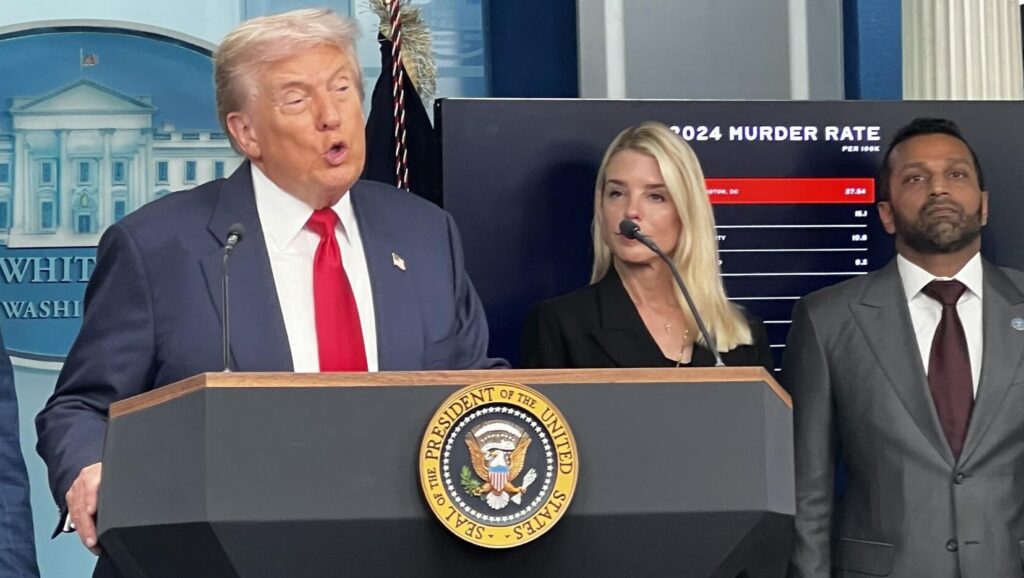
Illinois asks Supreme Court not to give Trump authority over National Guard

9th Circuit rules Trump can activate National Guard to protect ICE in Portland

WATCH: Pritzker not confident Trump can solve soybean trade deal with China
State senator points to failures as Illinois governor celebrates veterans home

Trump addresses Georgia’s years-long migrant farm worker concerns

Ongoing federal funding lapse now longest full government shutdown in history

Federal courts limit operations as funding lapse continues