Social Security fund to run dry in 2032, automatic cuts loom
Social Security’s retirement trust fund will be depleted in 2032, triggering an automatic 22% reduction in benefits for about 70 million Americans unless Congress acts, federal trustees warned Tuesday.
Social Security paid $1.6 trillion in benefits to 70 million Americans in 2025. The program provides a majority of income for 43% of older Americans, more than 25 million families, according to AARP, an advocacy organization representing older Americans. Any reduction would apply across the board to all beneficiaries.
The combined Social Security retirement and disability trust funds are projected to be depleted in 2034. At that point, payroll tax revenue and other income would be sufficient to pay about 83% of scheduled benefits, according to the 2026 annual report of the Social Security Board of Trustees.
The program’s financial outlook worsened over the past year. Trustees said Social Security’s 75-year funding shortfall increased to $29.3 trillion, while the long-range actuarial deficit grew from 3.82% to 4.42% of taxable payroll.
The projected depletion date for the retirement trust fund moved one year earlier than last year’s estimate. The $29.3 trillion shortfall is about equivalent to three-quarters of the current national debt of $39.2 trillion, according to Treasury Department data, and about 15 times the $1.9 trillion federal deficit projected for this year by the Congressional Budget Office.
The trustees attributed the deterioration to three factors: lower long-range fertility assumptions, reduced projected immigration levels and provisions of the One Big Beautiful Bill Act, a Republican-passed tax and spending law signed by President Trump on July 4, 2025. Lower projected immigration translates into a smaller future workforce and less payroll tax revenue.
The trustees also said changes affecting the taxation of benefits reduced projected income to the trust funds. The Committee for a Responsible Federal Budget projected in June 2025 that the legislation would reduce revenue from the taxation of Social Security benefits by roughly $30 billion annually, enough to accelerate depletion of the retirement trust fund by one year.
Commissioner of Social Security Frank Bisignano said improving service and eliminating waste, fraud and abuse remain priorities for the agency.
“To protect the promise of Social Security, it is important for lawmakers and the Social Security Administration to work together to ensure the trust funds continue to provide financial stability now and for future generations,” Bisignano said.
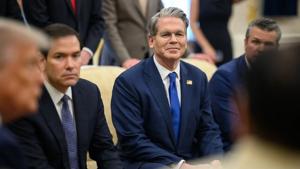
Treasury Secretary Scott Bessent, the board’s managing trustee, said the reports “reinforce the need for lawmakers to take action to support the long-term viability of these programs.”
Speaker Mike Johnson, R-La., said in a radio interview Monday that mandatory spending programs must be addressed.
“That’s your entitlement programs like Medicare, Medicaid, and then things like Social Security – they have to be adjusted and fixed,” Johnson said on “The Moon Griffon Show.” “We have a plan to do that next year.”
Romina Boccia, director of budget and entitlement policy at the Cato Institute, said the administration’s focus on fraud does not address the program’s underlying financial challenges.
“Social Security’s long-term shortfall is driven by demographics and benefit promises that outpace dedicated revenues – not by widespread fraud,” Boccia told The Center Square. “Focusing on waste, fraud, and abuse is good governance, but it should not distract from the structural reforms needed.”
She added that “delaying reform only makes the eventual adjustments more difficult” and that “every year of delay means fewer choices, steeper adjustments, and a larger burden on younger workers and future taxpayers.”
Maya MacGuineas, president of the Committee for a Responsible Federal Budget, said policymakers continue to underestimate the urgency of the situation.
“In just six years – during the next Senate class’s term – Social Security’s retirement fund will run out of money,” she said. “Yet our leaders have no plan to prevent the abrupt 22% benefit cut that would ensue.”
Michael Peterson, CEO of the Peter G. Peterson Foundation, echoed the concern.
“The senators we elect this year will be in office when Social Security becomes unable to pay out full benefits,” he said.
House Ways and Means Committee Ranking Member Richard Neal, D-Mass., and two Democratic colleagues said in a joint statement that the report “demonstrates the urgent need for Congress to act to protect Social Security and Medicare.”
“This crisis is both highly predictable and fully avoidable, as there are many well-known solutions available,” Peterson said. “Now is the time for responsible, bipartisan leadership to strengthen Social Security and Medicare.”




Mostly Sunny
Latest News Stories
Louisiana joins four states in complaint against electricity grid operator
Illinois quick hits: State rep. appointed circuit judge; Bailey to seek rematch with Pritzker

Heather Nohren Appointed Vice President for Student Services at Lake Land College

Meeting Summary and Briefs: Casey-Westfield School Board for September 15, 2025

Leavitt calls for firing UN staff if Trump’s escalator stopped intentionally

Figures show California is state with highest unemployment

Teacher union sues feds for delaying loan forgiveness

Catholic law professor says lower courts botched tariff rulings
Bipartisan lawmakers reintroduce DACA protections

Routh guilty on all charges in plot to kill Trump

Trump, Zelenskyy meet as Russia accused of violating NATO nations’ air space

WATCH: IL governor on photo with wanted suspect: ‘No way to vet everybody’

Illinois quick hits: Constitutional amendment would guarantee parental rights
Oversight committee expands probe on ‘politically motivated’ debanking