Poll: Voters back redistricting commissions over legislatures 2-to-1
American voters trust independent redistricting commissions over state legislatures to draw fair congressional district lines by a more than 2-to-1 margin, a new national poll finds.
The Center Square Voters’ Voice Poll found 41% of registered voters trust independent commissions to draw fair congressional lines, compared to 16% who trust state legislatures and 15% who trust courts. Twenty-seven percent were not sure.
The preference for independent commissions was bipartisan. Republicans favored commissions over legislatures 38% to 19%, while Democrats preferred commissions 45% to 15%. Among true independents, 38% trusted commissions most, compared to 8% who trusted state legislatures, although 43% were not sure.
Congressional district lines are typically redrawn once a decade following the U.S. Census. That norm has shifted, with more than a quarter of all congressional seats redrawn mid-decade after President Donald Trump called on states to redraw their maps ahead of the 2026 midterms.
Kyle Kondik, managing editor of Sabato’s Crystal Ball at the University of Virginia Center for Politics, said Democratic-run states will face challenges.
“We will likely see Democratic-run states going to their voters in 2027 to ask them to unwind or overturn their states’ preexisting redistricting commissions and rules, like California and Virginia did,” he told The Center Square. “Winning these battles may not be easy in some places, and this sentiment is a reason why.”
Benjamin Schneer, an associate professor of public policy at Harvard Kennedy School, said voters view redistricting abuse as a fundamental fairness issue.
“Survey research has found that Americans think of gerrymandering as on the same footing as forms of political corruption,” he told The Center Square.
Schneer said poll opposition alone is unlikely to stop the practice. It would take sustained focus and a compelling narrative for politicians or judges responsible for allowing mid-decade gerrymandering to be held accountable in future elections.
Justin Levitt, a professor at Loyola Law School in Los Angeles who tracks redistricting nationally, said the voter preference for commissions reflects a genuine, bipartisan preference for fair maps. When commissions are designed to be independent, they deliver independent maps, he told The Center Square.
He cited California’s independent commission after the 2010 census, which drew two senior Democratic incumbents, Reps. Brad Sherman and Howard Berman of California, into the same district, forcing them to compete against each other, something the Democratic Party never would have done.
Jason Torchinsky, a political and election law attorney at Holtzman Vogel who has worked on redistricting cases, said commissions have drawbacks.
“Commissions for redistricting entirely remove electoral accountability from the process, and even non-partisan or bi-partisan commissions are often captured by interest groups along the way,” he told The Center Square.
Walter Olson, a senior fellow at the Cato Institute who has written extensively on elections and redistricting law, said mid-cycle redistricting is expensive and disruptive, and the initial partisan advantages tend to disappear once the opposing party responds in kind.
Olson said Congress has the authority to act, and should use its enumerated powers to call a halt to mid-decade redistricting, with an exception for court-ordered redraws.
The National Conference of State Legislatures, a bipartisan organization that represents state legislatures across the country, said about 17 states use some form of commission to draw congressional district lines, including 10 that rely primarily on commissions rather than the legislature.
Lawmakers continue to play a role in redistricting even in those states, the organization said, whether by approving final maps or confirming commission members. Redistricting commissions are relatively new entities, NCSL told The Center Square, and additional redistricting cycles will provide a better understanding of their long-term impact.
Schneer said voter preferences can shift when redistricting becomes part of a larger partisan fight.
“Voters had previously passed a proposition to have an independent commission and then, as part of this larger partisan battle, turned around and suspended it,” he told The Center Square. “That’s an example that shows how much the messaging and context matters.”
Noble Predictive Insights conducted the poll from June 1-4, 2026. It surveyed registered voters nationally via opt-in online panel and text-to-web cell phone messages. The sample included 2,585 respondents, including 915 Republicans, 1,013 Democrats, and 297 True Independents. The margin of error is plus or minus 1.93%.




Isolated Rain Showers
Latest News Stories

In-home care rule change proposal generates more than 1,500 responses

Polis calls for return of Victims of Crime Act grant funding
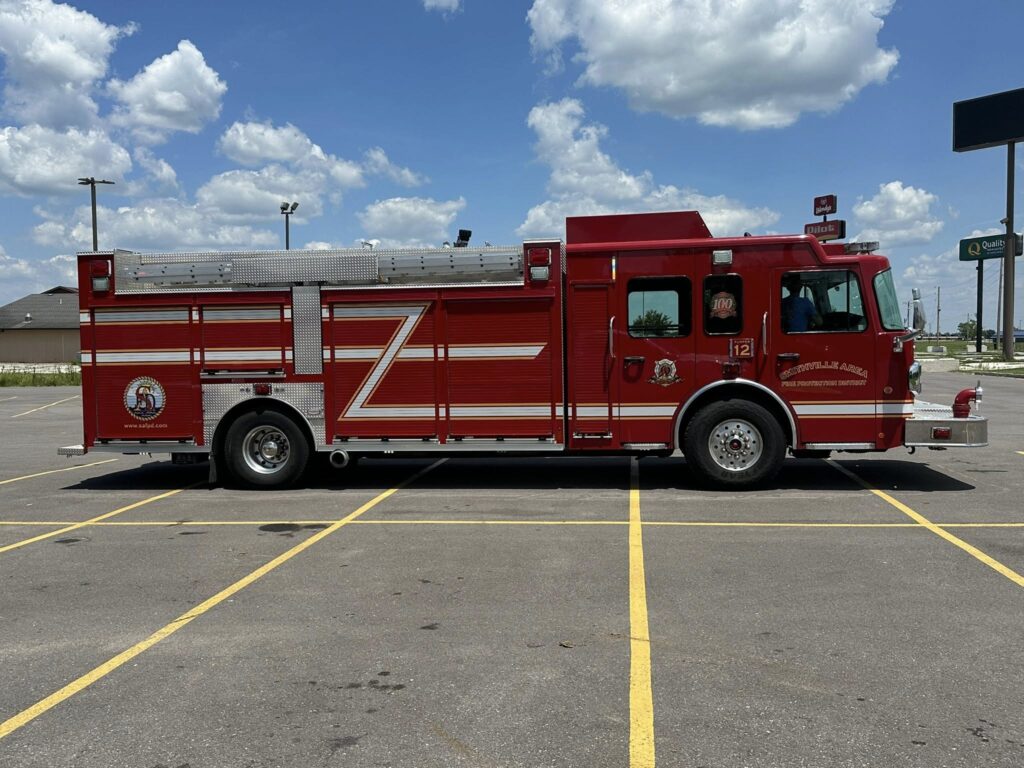
Casey Fire District Approves $400,000 Purchase of New Fire Engine

Clark County Board Faces Public Backlash Over Solar Projects
Casey Continues Sidewalk Replacements on Main Street, Plans Tree Removal

Billions in investment, thousands of jobs coming to RGV from LNG facility, pipeline
Bessent says Federal Reserve ‘must change course’

Legislation to end cashless bail in D.C., nationwide introduced in Senate

Chicago ranks near bottom in survey of best and worst run cities

WATCH: Pritzker to sue ‘immediately’ if Trump sends guard; GOP AG candidate profile
Illinois quick hits: Northwestern president resigns; unemployment claims rise
WATCH: Pritzker: Will go to court ‘immediately’ if Trump deploys National Guard