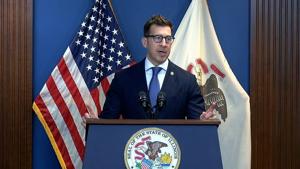
Pritzker approves law sealing reproductive medical records past state lines
(The Center Square) – Four years after the U.S. Supreme Court ruled overturned the right to abortion nationwide, Illinois Gov. J.B. Pritzker signed legislation he and lawmakers said will protect reproductive freedom in Illinois.
The Reproductive Health Records Privacy Act, sponsored by state Rep. Mary Beth Canty and Sen. Celina Villanueva, will seal reproductive health records from being accessed outside of the state without the consent of patients.
Laws in states across the country have been passed to restrict and sometimes make some reproductive healthcare services illegal in the years since the Court overturned Roe V. Wade.
The governor blamed the Trump administration for its policies toward reproductive healthcare for creating an unsafe environment in receiving care.
“Whether it’s attacks on medication abortion, efforts to undermine patient privacy, attempts to intimidate providers or schemes to allow other states to punish people for seeking legal care here,” Pritzker said.
Villanueva folded in gender-affirming services, like hormone treatments, when talking about protecting the right to abortion and reproductive healthcare. Those records are also covered under the law, according to the lawmaker.
Megan Jeyifo, executive director of the Chicago Abortion Fund, described Illinois as a safe haven to provide reproductive healthcare and abortion services.
“Today, one in four people who travel out of state for an abortion come to Illinois and CAF supports nearly half. That did not happen by accident. It happened because providers, advocates, and elected leaders made a conscious decision,” Jeyifo said.
Republican state Rep. Bill Hauter, a licensed and practicing medical professional, questioned the purpose of the bill before it passed through the General Assembly last month.
“This bill fundamentally misinterprets and mischaracterizes what the medical record is for, a private protected communication between healthcare professionals to take care of patients,” Hauter said. “The governor wants it passed, he wants to campaign on it, and we’re going to lose a very important thing. That is a complete and accurate medical record.”
Director of the Illinois Department of Health Dr. Sameer Vohra announced that alongside the new law, he’s imposing an update to a standing order to expand access to contraceptives.
The update specifically will allow pharmacists to dispense and sell an expanded suite of prescription contraceptives, which will now be required to be covered by Medicaid and state healthcare plans.
Pritzker penned a Substack post, released through his gubernatorial campaign Wednesday, reflecting on the status of reproductive healthcare in the state, and nationwide.
The article took a more political angle, making statements about Republican states and putting the Trump administration in his crosshairs.
“I enacted the Reproductive Health Act in 2019 to protect the right to a safe abortion and critical reproductive care long before Trump’s Supreme Court took that right away. That’s why when it happened, Illinois was ready,” Pritzker wrote.
He noted that he has since taken to pushing back against “right-wing extremism” nationwide through an advocacy group he started, Think Big America, in part by providing assistance to women traveling to Democrat-led states to access reproductive and abortion services.





Scattered Showers And Thunderstorms
Latest News Stories

Pritzker looks for rules for federal school choice scholarship program

Ex-deputy sentenced to 20 years in prison for killing Sonya Massey

Chicago homelessness on rise; advocates push for change
Partial government shutdown looms after funding deal failure

Lawmaker pushing bill to study insurance for gun owners

Illinois lawmakers consider bill to restrict SNAP buys
Homan touts progress; vows Trump administration won’t back down on immigration

WATCH: Congressional seat at stake; Pritzker on Medicaid costs, school choice, ICE

Illinois Quick Hits: Man charged with threatening ICE agents
Sen. Amy Klobuchar announces run for Minnesota governor
EXCLUSIVE: Minnesota workers say leaders rejected years of fraud warnings
Remote marriage license bill faces skepticism from former clerk