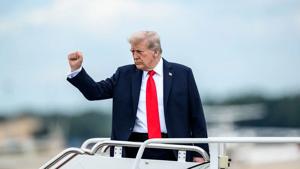
Hawaii gun law struck down by U.S. Supreme Court
The U.S. Supreme Court ruled 6-3 along ideological lines Thursday that a Hawaii law requiring concealed-carry permit holders to obtain permission before entering most private property open to the public is unconstitutional.
Hawaii has some of the most restrictive gun laws in the country, ranking sixth among the states for the “strength of its gun laws” according to gun violence prevention organization Everytown, and the court determined that the disputed law in this case went too far. Most places outside of the home are private property open to the public – restaurants, banks, grocery stores, ballparks, movie theaters, museums, amusement parks, etc. – and the court’s majority argued that the law effectively nullified the permit to concealed-carry.
“Hawaii’s new rule imposes severe restrictions on the daily activities of residents who have satisfied the state’s rigorous requirements for the issuance of a carry permit,” the court summary reads. “When these permit holders leave home, not only must they take care to avoid all the territory where the possession of a gun is prohibited outright, but they may also be barred from entering many places that people routinely visit in the course of their daily routines.”
The court pointed to earlier Supreme Court decisions holding that the Second Amendment protects the right to carry handguns outside the home for self-defense and that, through the 14th Amendment, that right applies to both the federal government and state governments.
The Second Amendment protects Americans’ right to bear arms, and the 14th Amendment’s due process clause states that no state shall “deprive any person of life, liberty, or property, without due process of law.”
The Second Amendment Foundation celebrated the court’s decision with a statement Thursday.
“If a business does not want you to carry a firearm on the premises, the burden should be on the proprietor, not the private citizen, which would be in line with the ‘no soliciting’ or ‘no shoes, no shirt, no service’ signs we’re all familiar with,” said the foundation’s Executive Director Adam Kraut. “Today the Supreme Court told Hawaii that such transparent attempts at banning constitutionally protected conduct will not be tolerated.”
Justices Ketanji Brown Jackson, Elena Kagan and Sonya Sotomayor dissented, arguing that Hawaii’s law did not threaten residents’ Second Amendment rights.
“[The law] fairly applies a first principle of property law — the right to exclude — and does no harm to the Second Amendment,” Jackson wrote. “Hawaii’s law does not implicate the Second Amendment because there is no right to carry a gun onto private property without consent (as all agree), and the Constitution does not dictate the form of that required consent.”





Slight Chance Showers And Thunderstorms then Partly Sunny
Latest News Stories
Early voting, vote-by-mail numbers trend higher as Illinois primary approaches

U.S. Senate to hold marathon debate on GOP voter ID bill
Carr calls for fair telecom treatment in Europe amid trade talks

Pritzker rolls out homebuyer aid; Republicans pitch other solutions

New health sharing program has seen 236% growth rate, with high hopes for 2026

Lawmaker, physician: Politicians are micromanaging medical education

FBI probes Michigan synagogue attack as targeted violence, antisemitism

Iran to see ‘highest volume of strikes’ yet on Friday
Illinois Quick Hits: One confirmed dead from Kankakee tornado

Four service members killed in KC-135 crash

U.S. military jet goes down over Iraq; incident not attributed to hostile fire

Casey-Westfield Explodes for 12 Runs in Third Inning, Downs Neoga 17-5