America 250: Celebrating the first attorneys general who fought for freedom
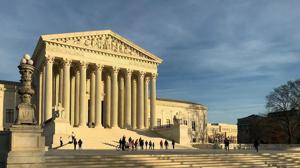
As Americans celebrate the 250th anniversary of independence, they are also celebrating the first attorneys general who helped establish the justice system.
Among the first five were those who served in the Continental Army, helped ratify the U.S. Constitution, were elected to state legislatures and served in state leadership roles. They also established legal precedent, advocated for states’ rights and defended impeached judges and a former vice president accused of treason.
The first U.S. attorney general was Edmund J. Randolph, appointed by the first president, George Washington. Randolph joined the Continental Army in August 1775 and served as General Washington’s aide-de-camp. A Virginia lawyer and delegate to the Continental Congress, Randolph helped draft and ratify the U.S. Constitution.
He was elected to the Virginia Constitutional Convention of 1776 and served on the committee that drafted the state bill of rights and constitution. He also served as Virginia’s governor, attorney general and in the Virginia House of Delegates.
As Washington’s secretary of state, Randolph’s negotiations with Spain were instrumental in westward expansion. He helped negotiate the 1795 Treaty of San Lorenzo, opening the Mississippi River to U.S. navigation and establishing U.S.-Spanish boundaries.
In 1795, he was forced to resign from Washington’s cabinet after he was accused of disclosing confidential information and soliciting a bribe, which he denied. He later represented Aaron Burr during his 1807 trial for treason.
Washington next appointed William Bradford as attorney general. The son of a publisher from Philadelphia, he’d volunteered in the Pennsylvania militia before joining the Continental Army. At age 25, he became Pennsylvania’s attorney general and was later appointed to the Pennsylvania Supreme Court. In 1794, he was appointed attorney general where he served until his death in 1795.
Washington then appointed the third attorney general, Charles Lee, who was the first attorney general to serve under two presidents. Lee was a member of the Virginia House of Delegates and served as a naval officer in the Potomac River District from 1777 to 1789.
He also served under the second president, John Adams, through March 1801. He later served as a circuit court judge and then established his own law practice. One notable case he litigated was Marbury v. Madison, representing William Marbury against the United States in 1803.
The landmark U.S. Supreme Court case established the principle of judicial review, allowing courts to strike down laws and statutes judges believe are unconstitutional. It also limited the power of Congress to expand the Supreme Court’s jurisdiction. “The Court’s opinion, written by Chief Justice John Marshall is considered one of the foundations of U.S. constitutional law,” Britannica states.
Lee also successfully defended Associate Supreme Court Justice Samuel Chase before the U.S. Senate in 1805 during his impeachment trial. He also joined Randolph in successfully defending Burr, who was acquitted.
President Thomas Jefferson appointed the fourth attorney general: Levi Lincoln from Massachusetts. Lincoln joined a Massachusetts militia unit of Minute Men after the Battles of Lexington and Concord in 1775. He was elected to the Continental Congress in 1781 but declined to serve.
He wrote a series of appeals to patriotism known as “a farmer’s letters to the people” and played an instrumental role in the events that led to the Marbury v. Madison case.
He served two terms as Massachusetts’ lieutenant governor and as its acting governor. He was elected to the Massachusetts House and Senate. He served for one year in the U.S. House of Representatives before he was appointed attorney general.
Jefferson also appointed the fifth attorney general, John Breckenridge, an advocate of states’ rights. He sponsored Jefferson’s Kentucky Resolutions, which, like James Madison’s Virginia Resolutions, advocated for states’ rights. They describe the United States as “a compact among sovereign states and the federal government as a creation of the states.”
He served as Kentucky’s attorney general in the Kentucky legislature. He also served in the U.S. Senate, where he advocated for westward expansion and supported the Louisiana Purchase. In 1805, he resigned from the U.S. Senate to become U.S. attorney general.
Breckenridge was instrumental in shaping early American law and governance, played a critical role in political debates related to the Alien and Sedition Acts, advocated for free speech protections and for a balanced federal system.
In 250 years, there have been 87 U.S. attorneys general, another nearly two dozen have served in acting capacities.
They’ve been members of five political parties: Federalists (3); Whigs (4); Democratic-Republicans (5); Democrats (34) and Republicans (40), according to an analysis of public data by The Center Square.
Only three have been women: Janet Reno, Loretta Lynch and Pam Bondi.
In 250 years, U.S. attorneys general have come from 29 states, with the most from Pennsylvania, followed by New York, Maryland, Virginia and Massachusetts.





Partly Sunny
Latest News Stories

B-52 bomber crashes after takeoff from California base

Kiley maintains lead in California congressional race

Chicago council defers meter sale approval, criticizes Johnson over ‘lack of transparency’

Funding, tax questions loom over Obama Center opening
SECURE Data Act offers ‘clear, enforceable’ privacy rules, without the big money lawsuits

Illinois Quick Hits: State announces new Medicaid contracts

Record tornado numbers impact Illinois economy
Trump and Iran sign peace deal amid mixed responses from Congress
Trump throws another curveball at FISA Section 702 reauthorization

Supreme Court to hear jury limits, disability cases

Campaign begins highlighting NYC nonprofit hospital’s prioritizing ‘woke’ ideology
Pro life org asks Senate for another bill to keep abortion defunded of tax dollars