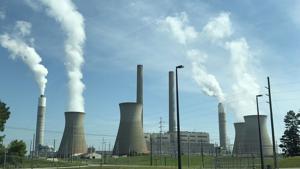
Energy group praises bill curbing EPA regulatory ‘abuses’
Recently introduced legislation that would rein in certain regulatory powers of the Environmental Protection Agency has drawn praise from dozens of energy industry groups.
The bicameral End EPA Abuse Act, sponsored by Sen. Mike Lee, R-Utah, and Rep. Andrew Clyde, R-Ga., forbids the agency from enforcing policies that fall under the purview of Congress.
That includes regulations which “can reasonably be determined” to undermine the electrical grid’s reliability, force fossil fuel power plants to change fuel sources, restrict the use or sale of internal-combustion engine vehicles, or “otherwise technically, economically, or practically infeasible.”
The Competitive Enterprise Institute, a free market think tank which had previously criticized the EPA for policies like tightening carbon emissions standards for power plants, hailed the bill’s sponsors for taking action.
“Instead of reacting to agency overreach after-the-fact, this bill makes it clear up front that the EPA is prohibited from using the Clean Air Act to take actions that common sense tells us Congress never would have authorized,” Daren Bakst, director of CEI’s Center for Energy and Environment, told The Center Square. “The legislation lists specific prohibitions addressing abuses we know the EPA has already engaged in and will likely try again. It also has an important catch-all provision to prohibit other future abuses.”
The Clean Air Act, enacted in 1970, allowed the federal government and states to develop regulations to limit the emission of toxic air pollutants from industrial and mobile sources.
Amendments to the act beginning in the 1990s expanded the EPA’s authority, allowing the agency to take actions like limiting the sulfur content in diesel fuel and enforcing the phasing out of ozone-depleting chemicals.
Bakst believes as soon as the EPA approves or tries to implement regulations so strict that they effectively force transition to electric vehicles or renewable energy generation, for example, the agency is clearly overstepping its authority.
In 2022, for example, the U.S. Supreme Court stopped the EPA’s attempt to broadly limit carbon emissions from American power plants in a way that would force a nationwide transition away from coal-powered electricity generation to other nonfossil fuel sources.
“Nobody with a straight face can say that Congress wanted the EPA to use the Clean Air Act to try and kill off gas-powered cars or to change how the country produces electricity,” Bakst said. “The agency has constantly been trying to act more like an economic planning agency than the Environmental Protection Agency.”
The End EPA Abuse Act is supported by the American Energy Institute, the American Energy Alliance, the American Consumer Institute, and others. Twenty state attorneys general have expressed support for the legislation as well.





Sunny
Latest News Stories
Illinois voices collide as Trump’s Maduro arrest fuels war powers debate

Illinois Supreme Court justice to retire

Bridge payment a ‘bandage,’ Illinois farmers say

Even with new rule, Illinois lawmakers could restrict inmate mail scanning

WATCH: States sue over funds; DHS responds to critics; Fed responds to investigation

Illinois quick hits: Child care funding unfrozen

Council Approves Police Union Agreement; Officer Moved to Full-Time

Chicago Flips Red calls for audit after public schools report

Meeting Summary and Briefs: Lake Land College Board of Trustees for November 2025

Casey Prepares for ‘America 250’ and Founders Day Parade

Foundation Announces Major Estate Gift; Board Accepts Workforce Grants

Council Updates Security Light Fees; Installation Cost Set at $350