U.S. Supreme Court allows late mail-in ballots to be counted
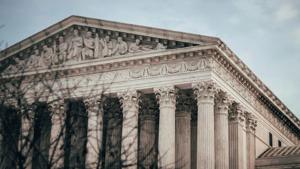
The U.S. Supreme Court, in a 5-4 decision on Monday, ruled that states can accept and count mail-in ballots received after the federal Election Day.
The decision comes out of the high court’s ruling in Watson v. RNC, a case challenging Mississippi’s acceptance of mail-in ballots up to five days after Election Day as long as the ballots are postmarked by that day.
Fourteen states and the District of Columbia allow mail-in ballots to be received after Election Day. In Illinois, mail-in ballots can be received up to 14 days after Election Day.
Justices on the high court said the decision in the case was narrowly tailored to recieving mail-in ballots after the federal Election Day. Justice Amy Coney Barrett said the ruling does not affect Congress’ ability to regulate federal elections or the practice of absentee voting.
“The federal election-day statutes do not preempt Mississippi’s law because the defining element of an ‘election’ has always been the electorate’s choice of candidate,” Barrett wrote in the court’s majority opinion.
Barrett pointed to laws allowing military and overseas voters to cast ballots that are counted after the federal Election Day to support the high court’s majority opinion. She also said the high court’s ruling is in line with the constitution on election laws.
“The Constitution requires the ‘Day on which [the electors] shall give their Votes’ to be ‘the same throughout the United States,’ but says nothing about the day for receipt,” Barrett wrote.
Advocates for receiving mail-in ballots by the federal Election Day pointed to recent changes in the U.S. Postal Service’s postmarking policy. In December, USPS changed its postmark policy to reflect when mail arrived in a processing facility, rather than when it was dropped off.
Several justices on the court disagreed with the majority. Justice Samuel Alito said the definition of Election Day provided by the majority is not straightforward. He said the choice of candidates should be clear by Election Day and that mail-in ballots confuse that process.
“If ballots received after election day are added to the set of ballots that dictate the election’s outcome, the electorate’s choice does not occur on election day, and the federal election-day statutes are violated,” Alito wrote.
Justices Clarence Thomas and Neil Gorsuch dissented alongside Alito. Justice Brett Kavanaugh agreed with most of Alito’s dissent.
The ruling will uphold mail-in ballot reciept deadlines in states across the country unless Congress changes the law.
Honest Elections Project Executive Director Jason Snead called the ruling deeply disappointing.
“Today’s ruling from the Supreme Court is deeply disappointing and misses the mark,” Snead said in a statement provided to The Center Square. “Federal law is clear: all ballots must be received by Election Day to be counted. The Court missed a major opportunity to reinforce election integrity and instead sides with California-style chaos.“As Justice Alito makes clear in his dissent, watching ballots trickle in after Election Day and flip races does nothing but damage public trust in our system of government,” Snead added. “Honest Elections Project will continue to fight cross the country for state laws that put a stop to late ballots and ensure that voting ends on Election Day.” Hans von Spakovsky, former Federal Election Commissioner and Senior Legal Fellow at Advancing American Freedom, also criticized the ruling. “It is a grave disappointment that just as we are celebrating the 250th anniversary of our Declaration of Independence, the Supreme Court has refused to correctly uphold the federal statutes setting the national day of federal elections in November,” von Spakovsky said in a statement provided to The Center Square. “The first of these three laws was passed in 1845 and was intended to stop the chaos and suspicions of impropriety from elections occurring over different periods of time in different states. By allowing ballots to be received and counted after Election Day, the Court is thwarting these federal laws and allowing the very chaos and suspicions Congress intended to prevent.


Sunny
Latest News Stories
WATCH: Commission meets as Chicago mayor seeks to prosecute ICE; SNAP changes Sunday

Illinois Quick Hits: Unemployment up over last year
Trump taps Kevin Warsh as next Fed chair
National shutdown, strike planned for Friday, Jan. 30 in protest of ICE
Gori firm accused of fraud, racketeering, ‘bounties’ in asbestos litigation

WATCH: Democratic legislators introduce anti-ICE legislation
Illinois Quick Hits: Grayson gets 20 years for murder
Bill Cassidy, facing Trump-backed challenger, bets on ‘who delivers’
Trump Cabinet meeting: New Fed chair, coal saving lives, Russia and Ukraine
Paul introduces legislation to halt welfare funding for non-citizens

Food companies push back on Pennsylvania bills to ban certain food products
Pritzker, Johnson express concerns about 2028 DNC with Trump in office