Analysts: Civil rights defined Supreme Court term
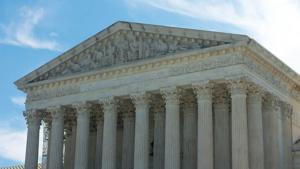
Analysts and legal experts said the U.S. Supreme Court’s term primarily was focused on protecting civil rights.
Justices on the nation’s highest court completed the most recent term on Tuesday, with high profile decisions on laws restricting transgender athletes, birthright citizenship and campaign finance.
However, analysts and legal experts said the court’s term, since the beginning of October, has been defined by protecting civil rights. Eric Wessan, Iowa’s Solicitor General, said the high court handed numerous victories to plaintiffs on civil rights issues across a wide spectrum of cases.
Wessan pointed to congressional resdistricting, Second Amendment issues and birthright citizenship. The high court also allowed marijuana users to possess firearms, restricted biological men from competing on girls and women’s sports teams, and allowed therapists to discuss unwanted gender dysphoria or same sex attraction with clients.
“Across the board, there is a real solicitude towards rights protected by the Constitution, kind of without fear or favor of who it affects,” Wessan said. “I think that is a really important kind of cross cutting across the various ideological divides on the court, and one where there have just been a string of victories for the rights of Americans over the course of the term.”
However, Wessan said he was disappointed by the high court’s interpretation of birthright citizenship. Wessan and Jonathan Adler, a professor at William and Mary Law School, said they were surprised how much Chief Justice John Roberts focused on the constitutionality of birthright citizenship in the order.
The high court upheld constitutional protections of birthright citizenship, citing the 14th amendment. The amendment as interpreted confers citizenship to children born in the United States and “subject to the jurisdiction thereof.”
Advocates for and against birthright citizenship fiercely clashed over the high court’s ruling.
“The Constitution does not mandate birthright citizenship as understood by what I think could be fairly called the majority’s position here on the constitutional issue,” Wessan said.
Adler said he was not surprised by the high court’s ruling but he said the justices could have approached their decision-making with less reliance on the Constitution. He said the decision would limit Congress’ ability to enact legislation restricting birthright citizenship.
“It is interesting that it adopted a more expansive decision than perhaps was necessary, and I think the way the court decided certainly means that this issue is actually not going to go away, because even the court did not talk about the statutory question,” Adler said.
Kannon Shanmugam, head of Supreme Court practice at David Polk and Wardell, disagreed with Adler. He said the court’s decision appeared to limit future efforts to restrict birthright citizenship.
“The court did not decide this case on statutory grounds. It went further and decided it on constitutional grounds,” Shanmugam said. “I think that was precisely to forestall any further efforts by Congress in this area, and I think it really reflects a pragmatic desire on the part of the majority to forestall further political debate on this issue of birthright citizenship.”
Derek Muller, a law professor at the Notre Dame School of Law, said numerous election cases decided throughout the term showed the high court’s desire to step away from litigating the political process. He said the court’s decision to strike down party spending limits, push back against racial gerrymandering, and allow late mail-in ballots are examples of shifting attitudes.
“There’s a theme in all these cases to say courts are stepping back from the political process, states can handle these issues. If Congress speaks, it has to speak pretty explicitly,” Muller said.
Muller said Watson v. RNC, where justices on the high court allowed Mississippi to accept and count ballots received after Election Day, shows the court’s unwillingness to deal with the political process.
“Even if this case had come out the other way, you wouldn’t get faster counting in most of these jurisdictions,” Muller said.
The analysts also showed intrigue over what appeared to be a split between the high court’s rulings regarding President Donald Trump’s ability to fire members of federal executive boards. The high court ruled that Trump could not fire Lisa Cook, a member of the Federal Reserve’s Board of Governors, but could fire Rebecca Slaughter, a member of the Federal Trade Commission.
The legal experts said the high court’s definition of presidential power in Trump v. Slaughter could mean the end of partisanship requirements on independent agencies like the FTC. Trump fired two Democratic appointees on the FTC in his case against Slaughter.
“I don’t see a world in which the next Democratic administration does not have it out for Republicans,” Shanmugam said.
Adler said executive branch agencies have not been substantially independent from the president for years. He said agencies like the FTC, Merit Systems Protection Board and the Consumer Financial Protection Bureau tend to implement a president’s administration policies.
“One role that minority commissioners on the agencies historically have played is blowing the whistle if the majority is doing something that is particularly controversial or property statute, and that may drop out, and in that respect it will make these entities more like pure executive branch agencies,” Adler said.
The high court’s whirlwind term proved to flex the judiciary’s power in providing guidelines for Trump’s agenda and supporting civil rights for plaintiffs.
“I anticipate that we’re going to see more of that next term,” Wessan said.





Sunny
Latest News Stories

WATCH: Report says more U.S. families are saving for college
Illinois to see 4 new consumer protection laws enacted

EXCLUSIVE: Report warns about costly regulations’ impact on short-term rentals
One in five calls answered on IRS identity theft line, watchdog says
‘Don’t be a hypocrite:’ Congressional hearing with DHS Secretary Mullin heats up

Hawaii gun law struck down by U.S. Supreme Court

Illinois SNAP error rate rises; Pritzker blames Trump

Watchdog: Canceled NASA contracts more than doubled in cost
Senate committee explores ways to protect American citizenship

Chicago video gambling hearing abruptly ends in debate, disarray
$87.6B war supplemental draws bipartisan questions about unrelated riders

Illinois Quick Hits: Court rules against parents in East St. Louis busing case