Officials: Trans athlete bans won’t change Illinois school sports
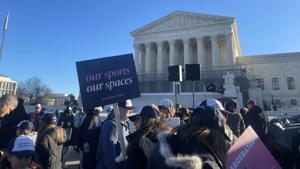
In a 6-3 decision Tuesday, the U.S. Supreme Court upheld multiple state bans on transgender athletes from competing in women’s and girls’ sports.
The ruling could have an impact on Illinois, and potentially the midterm elections.
The court upheld bans in two states, Idaho and West Virginia, which prohibited individuals who identified as transgender women and girls, but were born as biological males, from competing in college and youth sports.
In the majority opinion, justices said the bans did not violate Title IX, a federal law that prohibits sex discrimination in any education program or activity which receives federal financial assistance.
Illinois Gov. J.B. Pritzker posted a statement on the social platform X, in which he called the decision a “setback for equality in this nation.”
Ed Yohnka with the Illinois ACLU told The Center Square what the ruling could mean for Illinois students.
“The Supreme Court while it said that states could ban that participation, they didn’t say they had to. And so that leaves it up to Illinois to make this policy and nothing in Illinois should change as a result of the ruling today,” Yohnka said.
In a statement to The Center Square, Illinois Attorney General Kwame Raoul reflected Yohnka’s statement, and argued that students in the state, “have the right to fully participate in school activities, including sports.”
The Illinois High School Association, which has oversight of high school athletics in the state, currently determines the participation of transgender athletes on a case-by-case basis, per its policy.
“It is important to remember that these rulings actually impact a very small number of young people,” Yohnka said. “I think the last number I saw from the IHSA of students who had gotten the exemption were something like three in a particular academic year.”
Previous reporting has suggested there are only about 25 transgender athletes participating in youth sports statewide. Of them, only three or four participate in girls-only sports.
State Rep Tom Weber, R-Lake Villa, said he is in favor of the ruling in a statement to The Center Square.
“I applaud the Supreme Court for recognizing that protecting the safety of girls and women in sports and ensuring fair competition is more important than bowing to any political pressure of the moment,” said Weber.
Connie Mixon, a professor of political science at Elmhurst University, explained potential political ramifications of the ruling, especially as the midterm elections approach.
“[The issues] play more into the culture war, which I guess can fire up some partisan voters in some sense, but they don’t do much for pocketbook economic kinds of questions that voters are deciding on,” Mixon said.
She suggested that the ruling could be used as political fodder in the upcoming election on both sides of the aisle.
“Democrats will use it to spark some sense of urgency to boost voter turnout, they’ll give us a sort of ‘what’s next?’ warning,” Mixon said, suggesting the party could point to a rollback on same-sex marriage.
She said Republicans could use it as a political win.
“Republicans will try to maybe elevate it from just the sort of culture war talking point, leaning into the ruling because the Supreme Court actually said that there were inherent physical differences in terms of women’s sports,” Mixon said.



Sunny then Slight Chance Showers And Thunderstorms
Latest News Stories
Trump says he’s ready to nominate up to three Supreme Court justices
Military hostilities in Iran continue after Senate tanks War Powers Resolution

WATCH: Detransitioner battles to revive landmark malpractice and fraud lawsuit

Iran economic fallout is temporary, Hassett says

Illinois Quick Hits: NFIB says biz deduction will bring jobs, benefit to Illinois

Soaring costs and short supply shut millennials out of housing market
Vought testifies before lawmakers on Trump’s $2.1T budget request

SNAP eligibility changes spark debate on gap for impacted recipients

Trump puts spotlight on China, Iran’s top oil consumer
Lawmakers, auditors offer fraud prevention solutions

Illinois unions seek to kill Waymo-friendly bill in Springfield
Rich States Poor States: Tax policy largely determines states’ economic competitiveness