Op-Ed: Solving the data center conundrum – America’s next boomtowns may be nuclear towns
We were in a grassy field in southern Ohio next to one of the largest nuclear fuel facilities in the US. Severe storms had rolled through the night before, but now the skies were clear.
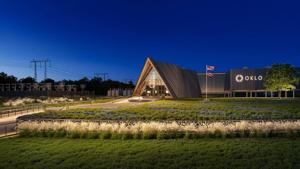
Oklo and Centrus Energy Corporation were announcing a new partnership: Centrus would be providing fuel for Oklo’s advanced nuclear plants — the ones planned to support Meta’s regional data center operations.
Senators, representatives, and local officials shared the stage to voice support for the nuclear buildout and to celebrate its economic benefits for Pike County.
Pike County had once been a thriving industrial hub whose workers had helped power America’s Cold War defense. Then the plant closed. Now the Oklo-Meta project is working to bring back jobs.
Data center developments promise economic benefits to local communities. Yet communities are pushing back. People are concerned those developments will take more than they give — that the data center’s added electricity demands will push electricity bills higher, and the jobs it creates won’t offset the higher costs.
Residents are not wrong to worry. A large data center can consume as much electricity as a small city, and if utilities build new infrastructure for just that data center, families want to know they will not be stuck with the bill.
Utility bills are in fact on the rise. But data centers are only part of the story.
First, the grid is old, and most utilities have a backlog of deferred maintenance projects. The bills for those projects are coming due, and utilities will ultimately pass the costs on to consumers.
Second, after years of relatively flat growth, there’s increased demand for electricity on account of, yes, data centers, but also widespread electrification and manufacturing, and there hasn’t been a corresponding rapid increase in electricity supply. The inevitable result is that we need more power to meet demand growth.
Ironically, building a data center next door could help curb how much more people pay – provided it’s a development of the right sort.
There are two kinds of data center developments: takers and makers. Takers aim to take power from the local grid. Makers aim to bring their own power and feed any surplus capacity they generate into the local grid.
It’s like the difference between having a neighbor who drops in and eats all your food versus hosting a neighborhood potluck in which a neighbor brings extra food to share.
Rather than competing for electricity with local communities, makers supply new power to meet new demand.
The surplus capacity they generate makes the grid more stable. Better yet, it helps lower electricity costs.
That’s one benefit local communities can expect from having a maker data center development next door. But there’s an even bigger benefit: jobs.
The landmark agreement Meta and Oklo announced in January 2026 to build, operate and maintain a new generation of advanced nuclear plants promises to bring thousands of jobs to the region – and not just any jobs, but a variety of jobs at different levels of education.
For example, the majority of roles that need to be filled will include operators, maintenance technicians, electricians, mechanics, and other skilled trades roles that can be filled through apprenticeships, technical training, and certifications. A quarter of the jobs will include specialized technical fields such as instrumentation and controls, radiation protection and plant operations, creating strong demand for community colleges and two-year technical programs.
These are jobs in addition to traditional engineering and management positions. This variety of jobs means that the benefits of advanced nuclear development can be broadly shared across local communities and workforces.
That’s because nuclear energy supports more high-quality jobs than any other major source of power: about 500 jobs per gigawatt (Figure 1). Those jobs pay a median wage of $56 an hour – more than other energy-industry jobs.
And these aren’t temporary construction roles or positions that are easily outsourced. They’re durable careers tied to operating infrastructure and maintaining power plants.
The Meta-Oklo deal promises to help southern Ohio become once again an epicenter of economic growth. The same will happen with other communities who decide to greenlight data centers powered by advanced nuclear plants.
Those communities will see more stable, long-term economic growth. What’s true of them is true of the U.S. as a whole. If we get the nuclear energy transition right, the country will expand its industrial capacity, create high-quality jobs, and sustain long-term growth, while at the same time protecting our land, air and water.
If we get it wrong, we’ll continue seeing community pushback and we’ll forfeit U.S. energy independence and the AI boom to foreign countries.
Nuclear stands out for its ability to deliver the high-quality power needed by energy-intensive industries that can’t tolerate interruptions or volatility. It provides electricity on demand 24/7 with a minimal land footprint and without the air pollution generated by fossil fuels. Best of all, it creates permanent high-quality jobs.
That puts it at the forefront of America’s economic future – the most effective way of delivering the energy, jobs and long-term prosperity that the next era of global growth demands.






Mostly Sunny then Slight Chance Showers And Thunderstorms
Latest News Stories

Illinois Quick Hits: Chicago suffers credit rating downgrades
Council Approves School Resource Officer Renewal and Water Main Easement
Martinsville Appoints Josh Stowers as Head Football Coach
Casey Fire Protection District Reports Financial Standing, Outlines Vehicle and Equipment Updates
City Plans Memorials for ‘World’s Largest’ Creator Jim Bolin

Martinsville School Board Approves New Youth Basketball League and Summer Recreation Agreement
Casey Council Authorizes Purchase of Former Charles Industries Property
Marshall School Board Approves Major Changes to Football Seating and Junior High Track

Meeting Summary and Briefs: Casey City Council for Feb. 2, 2026
Council Votes to Reclaim Downtown Properties After Development Stalls
Meeting Summary and Briefs: Casey-Westfield Board of Education for Jan. 26, 2026
Casey-Westfield FCCLA Ranked No. 1 in Region for Service Hours