Illinois politicians claim cautious win in birthright citizenship ruling
(The Center Square) – The U.S. Supreme Court ruled 6-3 against an executive order by President Donald Trump Tuesday, which sought to ban birthright citizenship nationwide.
A number of political heavyweights in Illinois have weighed in on the judgement.
The court heard arguments and ultimately struck down the president’s February 2025 order stripping birthright citizenship protections from children born after Feb. 19, 2025, whose parents are either illegally present in or temporary residents of the United States.
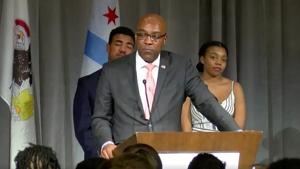
Illinois Attorney General Kwame Raoul joined 23 other states and D.C. in filing an amicus brief in the case, arguing the executive order was unconstitutional.
On Tuesday, Raoul again addressed the case in a statement.
“As someone born to an immigrant mother not yet naturalized at the time, the fight to preserve birthright citizenship has been a personal one. I am disappointed that this was not a unanimous ruling. This case doesn’t require a complex interpretation of the Constitution; the language is plain,” Raoul wrote in his statement.
Raoul also joined three other states – Washington, Oregon and Arizona – in suing the federal government to block the order from taking effect until there was a ruling.
Ed Yohnka of the Illinois ACLU weighed in on Raoul’s part in preventing the order.
“One of the things that we are seeing in many ways is that they want to use the full power of the federal government in order to try to force their vision of the country onto everybody else,” Yohnka said. “I think it is admirable and helpful that the attorney general of the state of Illinois is reflecting the will of the voters of our state.”
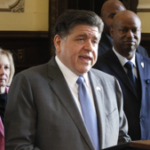
Gov. J.B. Pritzker commented on the ruling Tuesday, when he said in a statement that the decision was an “important victory,” but noted a larger fight against the president’s “illegal actions” is far from over.
“Trump’s racism made him unable to understand that birthright citizenship helps make America great. He went after the Fourteenth Amendment because making our country smaller was the only way he could make himself feel bigger,” Pritzker wrote in the statement.
Today’s Supreme Court decision reaffirms a simple but fundamental truth: if you are born in the United States, you are a Citizen of the United States.No child should grow up wondering whether they belong in the only home they have ever known.Chicago is and will remain a… pic.twitter.com/MKKPclwOcj— Mayor Brandon Johnson (@ChicagosMayor) June 30, 2026
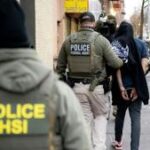
Chicago Mayor Brandon Johnson also addressed the ruling, tying the decision back to the Trump administration’s ICE actions in Chicago and the historic context of the Fourteenth amendment.
Connie Mixon, a professor of political science at Elmhurst University, said the decision may not have a major impact on politics in the state, but could change how candidates message in the coming election.
“The decisions may shift campaign rhetoric, political messaging, voter mobilization, those types of things for both Republicans and Democrats,” Mixon said. “What may be a larger issue in the campaign and a contention point in Illinois politics more generally is the state status as a sanctuary status and, you know, whether or not local governments cooperate with ICE,” Mixon said.


Mostly Sunny
Latest News Stories

Illinois quick hits: O’Fallon man allegedly work with cartel; most dangerous for nursing home safety
Watchdog says Biden Education Department defied court order on Title IX enforcement
Illinois in Focus: Candidate urges civil debate around ICE; state spends 43% more; mandatory voting

Emergency HVAC Repair Approved for Lake Land’s New Effingham Technology Center

Ohio’s American-owned nuclear energy company plans expansion
Trump demands investigation into ‘sabotage’ during U.N. speech
WATCH: McMahon discusses education at Reagan Institute

Illegal border crossings near record low in August

Lower U.S. oil production projected in 2026
GOP leader disputes Newsom’s comments on Colbert’s show
‘Ivy League’ doesn’t mean excellent medical schools, according to new index
Report: ‘weaknesses’ and ‘unusual increases’ found in management of Ukrainian aid