Legislators to consider bill designed to protect Altadena
Legislation to protect Altadena from predatory real estate speculation moves to committee hearings Wednesday in Sacramento.
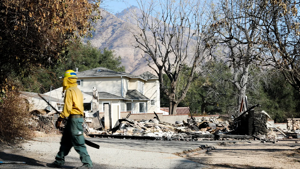
Known as the Keep Altadena Lands in Altadena Hands Act, Senate Bill 1090 would establish a temporary moratorium on specific state housing density laws (SB 9 and SB 1123). The measure follows the January 2025 Eaton Fire, which burned 14,921 acres and destroyed 9,418 structures in the Altadena-Pasadena area. It was one of the most devastating blazes in the history of Los Angeles County.
During the rebuilding of the unincorporated community of Altadena, residents have become upset over developers constructing multiple homes on lots that had single homes before the Eaton Fire. SB 1090 addresses that.
SB 1090 first will be heard Wednesday by the Assembly Housing Committee at 9:30 a.m., followed by the Assembly Local Government Committee at 1:30 p.m.
Following the Eaton Fire, state Sen. Sasha Renée Pérez, D-Pasadena, who co-authored SB 1090, noted coastal areas such as the Los Angeles neighborhood of Pacific Palisades and the city of Malibu previously received exemptions from density laws because they are classified as High Fire Severity Zones. Both areas were hit hard by the Palisades Fire in January 2025.
Because most of Altadena lacks the “High Fire Severity Zone” designation, it was left unprotected, leaving Eaton Fire survivors vulnerable to what Pérez calls “disaster capitalism.”
Outside speculators and predatory investors are already capitalizing on the financial distress of local residents, according to supporters of SB 1090.
“One report found investors purchased close to 49% of properties sold between February and July 2025, compared to approximately 10% during this same period in 2024,” Pérez told The Center Square.
“Predatory real estate speculation can have a ripple effect on the fabric of impacted communities, driving up housing costs, eliminating naturally occurring affordable housing, permanently displacing fire victims, and destabilizing communities through gentrification,” said the senator, who is hosting a news conference Wednesday morning in Sacramento ahead of the hearings.
Co-authored by Assemblymember John Harabedian, D-Pasadena, and sponsored by Los Angeles County Supervisor Kathryn Barger, the legislation aims to preserve a community known for historic neighborhoods of single-home lots and a street nicknamed “Christmas Tree Lane” for its towering deodar cedar trees.
“The families who survived the Eaton Fire are not asking for special treatment,” Barger told The Center Square Tuesday, answering questions by email. “They are asking for time and a fair opportunity to rebuild and return home.
“SB 1090 is a temporary, tailored response to an extraordinary disaster, and I remain hopeful that members of the California Legislature will meet these survivors with the empathy and support they deserve,” said Barger, who represents a district that includes Altadena. “Standing with Altadena’s families today means preserving their chance to come home tomorrow.”
Barger and Altadena Town Council President Nic Arnzen are scheduled to testify at Wednesday’s hearings before legislative committees. The town council isn’t empowered to make laws for the unincorporated community, but it advises Barger and the county government.




Showers And Thunderstorms Likely
Latest News Stories
U.S. Supreme Court allows IL rep to sue over late ballots
50 Years of Richards Farm Restaurant Celebrated

IL advocates warn permanent mail-in ballots could be exploited
Illinois Quick Hits: State spends $87M on ISU fine arts project

WATCH: Legislator warns tax dollars used to impede ICE; Pritzker and Trump talk crime

Trump visits Michigan to promote economic ‘turnaround’

Meeting Summary and Briefs: City of Casey Council for Jan. 5, 2026

Music, drama teacher sues Catholic HS over ‘anti-gay’ discrimination

Fed charges: Yemeni, Haitian nationals stole millions in SNAP benefits
Illinois Quick Hits: IDPH accountability officer fired

Los Angeles County considers creating ICE-free zones

States sue feds over gender ideology rules on health grants