Seattle, King County to retake control of troubled regional homeless authority
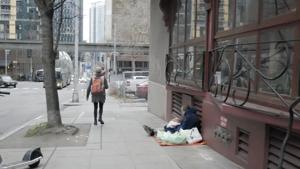
The troubled King County Regional Homeless Authority is being significantly restructured, with the city of Seattle and King County taking back control of programs to house the homeless.
The outlines of the restructuring were set to be announced at a press briefing by officials from King County and the City of Seattle Wednesday morning. The Center Square was provided an advanced copy of the press materials.
The KCRHA will continue to exist to help coordinate programs for the homeless and to be the agency responsible for receiving federal funds to help the homeless population, according to the press material.
A formal press conference with King County Executive Girmay Zahilay and Seattle Mayor Katie Wilson will be held Wednesday afternoon to discuss the changes.
The retuning of the agency comes after a critical outside forensic audit in April found that the regional agency had lost track of how it spent $8 million of its approximate $200 million budget.
It also found more than $6 million in administrative overspending and more than $1 million in interest payments the agency was making.
Wednesday’s announcement is a formal acknowledgment by officials that the six-year-old authority, established to provide a coordinated approach to the region’s homeless program, has not worked effectively.
Besides administrative problems, including five CEOs in its short tenure, the authority has been unable to stop the continuing rise of the homeless population in the region.
Homelessness in King County reached a record high of 18,365 individuals in 2026, reflecting a 9% increase since 2024, according to a point-in-time count released last week.
While this growth rate has slowed down from the 26% spike between 2022 and 2024, the unsheltered population surged by 21% in the latest count, from two years earlier.
Officials said returning responsibility to Seattle and King County to administer programs for the unhoused “aligns responsibility with the organizations best positioned to carry them out.”
Mayor Wilson had expressed concern even before the critical audit about whether the regional homeless authority was doing its job.
She launched her own program to build 4,000 units of temporary housing for the homeless in March over the next four years without the authority’s help.
Officials warned the restructuring will take some time and coordinated efforts.
“Throughout this transition, our priority is to minimize disruption, maintain critical response times, support providers and continue working in partnership with local governments, labor, philanthropy, people with lived experiences and other regional partners,” the release said.
Both Seattle and King County will have to rebuild administrative structures that had been taken over by the regional authority in order to resume direct control over their housing programs.
The city of Seattle currently provides around 60% of KCRHA’s funding.






Chance Showers And Thunderstorms
Latest News Stories

Judge declines CTU’s motion to dismiss financial audit lawsuit

Illinois pushes rate-hike protections forward despite consumer cost fears
Illinois bill aims to delay 2024 tax sales, protect homeowners’ equity

Illinois Quick Hits: Man on pretrial release charged with fireman’s murder
Casey-Westfield High School Students Secure Top Honors at Regional Academic Competitions

Comptroller, state lawmaker call for federal tax credit scholarships

Early Surge and Defensive Miscues Propel Casey-Westfield Past Centennial 11-1

Karras and Goble Lead the Way as Casey-Westfield Softball Downs Clifton Central 6-1
Power Surge and Goble’s Arm Lead Casey-Westfield Softball Past St. Anthony, 7-1

Marshall School Board Approves Adjusted 2025-26 Schedule, Sets 2026-27 Calendar
Gilbert’s Shutout and Seven-Run Fourth Inning Propel Casey-Westfield Past Centennial, 10-0
District to Purchase Discounted Floor Burnisher for Junior/Senior High School
Casey-Westfield Capitalizes on Oakwood Errors, Holds On for 6-3 Victory
Casey-Westfield Capitalizes on Free Bases in 14-1 Rout of ALAH