Trump’s DOGE effort ends July 4 with no final tally, no rebates
The Department of Government Efficiency will not issue a closing report when it officially ends July 4, Office of Management and Budget Director Russell Vought said. The $5,000 rebate checks it once floated for taxpayers never came.
“We have no plans to do kind of a closing DOGE report,” Vought told Rep. David Joyce, R-Ohio, chairman of the House Appropriations Subcommittee on Financial Services and General Government, during a Tuesday hearing.
DOGE’s own website reports $215 billion in total savings, or $1,335.40 per taxpayer using an estimate of 161 million federal taxpayers. That $215 billion figure has not moved since Jan. 1. It’s also just over a tenth of the $2 trillion target set at launch.
“There is too little reliable information available for taxpayers to verify” DOGE’s cost-savings claims, said Edward López, senior fellow at the Independent Institute, a nonpartisan public policy research organization.
López compared DOGE to past reform efforts, including the Grace Commission under President Ronald Reagan and the National Performance Review under President Bill Clinton. Both operated under statutory authority and produced final reports subject to oversight. DOGE, by contrast, was a non-statutory operational unit with no such requirement, he said.
López said DOGE was a political success for Trump, but not for taxpayers.
“Certainly in terms of verifiable, line-item savings that make a significant dent that taxpayers will feel, DOGE did not actually work,” he told The Center Square.
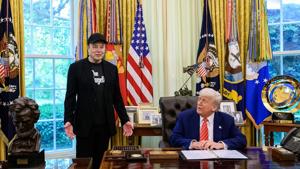
In February 2025, Trump and then-adviser Elon Musk floated sending taxpayers 20% of DOGE’s savings, an idea that originated from Azoria co-founder James Fishback. House Speaker Mike Johnson, R-La., broke with Trump and Musk on the idea at the time, telling a crowd at the Conservative Political Action Conference he’d rather “pay down the credit card,” a reference to the nation’s $39 trillion debt.
The White House defended DOGE’s work, but did not answer questions from The Center Square about the cost of DOGE, the total savings or if a final report was needed.
“President Trump was given a clear mandate to eliminate waste, fraud and abuse from the federal government. He has made significant progress in making the federal government more efficient to better serve the American taxpayer,” White House spokesperson Davis Ingle told The Center Square.
Reps. Michael Cloud, R-Texas, Ashley Hinson, R-Iowa, Jodey Arrington, R-Texas, and House Speaker Mike Johnson, R-La., did not respond to requests for comment by deadline.
Joyce said DOGE was “pretty much eliminated” from the 2027 budget. The budget appendix shows USDS funded at $35 million for fiscal year 2027 through reimbursements from other agencies, not direct appropriation, with 130 employees, up from 125 the year before.
A The Center Square review of the fiscal year 2027 budget found no consolidated line item tracking DOGE’s total cost government-wide. A Senate Permanent Subcommittee on Investigations minority staff report last year estimated DOGE generated $21.7 billion in waste in its first six months alone, a figure Vought said Tuesday he had not reviewed.
The U.S. DOGE Service Temporary Organization is set to expire July 4 under Executive Order 14158, the order that created DOGE in January 2025. USDS itself will continue.





Slight Chance Showers And Thunderstorms
Latest News Stories

Illinois Quick Hits: Governor announces green tax credits for film and TV

‘Plaintiffs’ lawyer paradise:’ IL lawsuit-friendly courts jack up costs, report says

AG candidate seeks to reform SAFE-T Act

Op-Ed: Senate Bill 3070 provides sensible solution for students, manufacturers

Illinois millionaire’s tax moves closer to November ballot

Ava Goble’s Complete-Game Shutout Powers Casey-Westfield Past Richland County 8-0

Casey-Westfield Blanks Richland County 2-0 Behind Masterful One-Hit Shutout

U.S. Navy intercepts, seizes Iranian cargo ship

Everyday Economics: Retail sales and housing suggest a resilient consumer

Authorities: 8 children killed in domestic shootings in NW Louisiana

Reentry housing bill draws support from advocates; debate centers on cost, public safety

Supreme Court to hear migrant parole case Wednesday