GAO: Additional actions needed to secure northern border
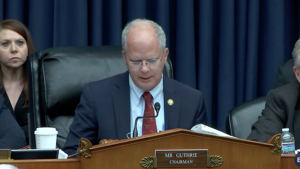
At a recent Congressional hearing, Subcommittee on Border Security and Enforcement Chairman Michael Guest, R-Miss., and Subcommittee on Counterterrorism and Intelligence Chairman August Pfluger, R-Texas, both said that because the southwest border was secure under the Trump administration, cartel and transnational criminal organizations had recently shifted focus to the northern border.
But prior to the second Trump administration, Mexican cartels had already expanded their operations, “flying people into Canada, which doesn’t require a visa, presenting an opportunity for terrorist watch-listed individuals to exploit. It’s much easier to get to Canada to come across,” former Border Patrol chief Mark Morgan told The Center Square two years ago.
Mexican cartel smuggling at the U.S.-Canada border isn’t new. During the Biden and Trudeau administrations, illegal activity increased to record levels, exploiting weak Canadian border security and lax visa policies, The Center Square reported based on Customs and Border Patrol data.
Under the Biden administration, the greatest number of known or suspected terrorists, 1,089, attempted to enter the U.S. from Canada, The Center Square exclusively reported from the CBP data.
Canadian groups have also identified extensive criminal networks. The International Coalition Against Illicit Economies argues the “biggest cross-border criminal security threats to Canada and the US are the staggering amounts of dirty money that is laundered in both countries by Mexican cartels, Chinese money laundering syndicates, and other transnational criminal organizations that finance greater insecurity and instability.”
Punjabi gangs have also been operating a billion-dollar drug supply network, trafficking heroin and methamphetamines from India to North America and Europe through Canada; the Hells Angels biker gang controls domestic drug distribution in Canada; and an Iranian crime network is a “silent partner in fentanyl smuggling” in Canada, ICAIE says, The Center Square reported.
More recently, Iranian threats have increased and more Iranians were just blocked from entering the U.S. from Canada. Gun smuggling operations continue to be thwarted, including involving Pakistanis and Jordanians. CBP Detroit Sector agents have seized the greatest volume of drugs at the northern border in U.S. history. An international human smuggling ring exploiting Canadian visa processes was also thwarted by U.S. officials.
Heather MacLeod, director of Homeland Security and Justice at the GAO, pointed to a GAO report published June 30 that notes that “CBP has faced longstanding challenges addressing staffing gaps.” GAO found that the number of Border Patrol agents on the northern border decreased by 6% from 2019-2024. The staffing rate for Law Enforcement Information Systems Specialists who monitor surveillance technology also decreased, according to the GAO.
The report also points to the 2019 GAO audit, which found that “CBP did not have measures to assess its effectiveness at securing the northern border between ports of entry. Border Patrol had performance measures that assessed security in remote areas, but the measures did not include data from maritime border areas.” This is still true today, MacLeod said.
The Center Square first reported on the 2019 GAO audit noting that some officials suggested the U.S. Department of Homeland Security only had 1% operational control over the northern border under the first Trump administration. Additionally, none of roughly 950 miles of the U.S.-Canada border were covered by unmanned aircraft surveillance prior to 9/11, according to a 2012 DHS report.
MacLeod emphasized the need to increase hiring and establish metrics to assess the effectiveness of border security efforts.
The first concern has been initially addressed by Congress. The Big Beautiful Bill Act allocated $4.1 billion for U.S. Customs and Border Protection hiring and training. The Secure America Act appropriated another nearly $25 billion.
Bipartisan efforts have been made to address the second concern. U.S. Rep. Nick Langworthy, R-New York, introduced the Northern Border Security Enhancement and Review Act to require DHS to conduct and submit a Northern Border Threat Analysis and implement metrics to assess effectiveness of border security efforts. U.S. Sen. Maggie Hassan, D-NH, also introduced the bill. The bill hasn’t gained any traction.
Pfluger acknowledged that current policies don’t fully account for how existing border security methods intersect with vulnerabilities along the northern border.
“We must deepen our understanding of the cross-border facilitation networks that enable illicit movement – including those tied to criminal smuggling pipelines,” he said. There also needs to be a concerted effort to “rigorously monitor cross border financial flows – including illicit finance and money laundering,” he added. Congressional oversight must also “strengthen defenses against prohibited materials, from chemical and biological attacks to radiological and nuclear … to prevent funds from supporting terrorism,” he said.





Sunny then Slight Chance Showers And Thunderstorms
Latest News Stories
Texas AG Paxton files motion of contempt against O’Rourke

WATCH: Illinois In Focus Daily | Wednesday Aug. 13th, 2025

Illinois law empowers officials to crack down on predatory towing
Texas Supreme Court sets expedited schedule in Paxton, 13 House Dems case
Texas Supreme Court sets expedited briefing schedule in Abbott-Wu case

Illinois quick hits: Former Chicago schools dean sentenced for sexual assault
Friday meeting with Putin a ‘listening exercise’ for Trump, Leavitt says

S&P 500, Nasdaq enjoy record day

Trump condemns possible low-income housing Pacific Palisades rebuild

Pro-marijuana groups claim reclassification would be good for businesses

Illinois quick hits: Fatal crash involved Guatemalan national; tentative Chicago firefighters contract

WATCH: Sonya Massey bill requiring full employment history for police candidates now law