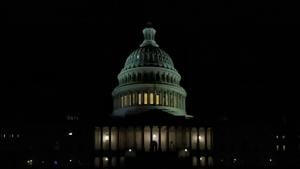
Illinois congressman pushes to repeal federal tax cuts
(The Center Square) – A Democrat Illinois congressman sparked pushback after urging fellow Democrats to repeal all aspects of President Donald Trump’s “One Big Beautiful Bill Act” at the earliest moment possible.
U.S. Rep. Sean Casten, D-Ill., said in a virtual town hall last week he wants Democrats to swiftly repeal the working families tax cut, among other Republican policies enacted during this congressional term backed by the president.
Casten addressed a variety of concerns constituents brought his way – many worried about cuts to federal services like Medicaid and Social Security insolvency – while on the town hall call.
“We are pursuing litigation where we can to push back on that. In some cases, we’re having some success, but you can’t really – the cutting and funding, that was done by an act of Congress, so you can’t say they’re breaking the law. And so we’re basically going to keep fighting to repeal that whole damn bill once we get the gavels back,” Casten said.
Casten doubled down in a series of posts on the social platform X after Republicans were critical of his statement.
8. That’s in addition to the political benefits of a fairer tax code and the fiscal benefits of less long term borrowing. So look: if you want to be fiscally irresponsible, mean to the most vulnerable and sycophantic to rich bullies, you be you. But at least be honest.— Sean Casten (@SeanCasten) July 9, 2026
An account operated by the Republican National Committee, which reportedly operates closely with the political arm of the Trump administration, quickly captured and published Casten’s statement, criticizing him for wanting to reverse course on what it called the “the largest tax cuts in American history.”
Casten hit back, arguing that the OBBBA’s tax cuts aren’t truly helpful for working families in the U.S.
“The idea that these cuts are helping the working class is total BS, which you know. The ‘no tax on tips’ is only on the incremental tip income, only for families earning [less than] $150K/year and it expires in 2028,” Casten said in one post.
According to the June, 2026, federal Monthly Treasury statement, the nation’s deficit for the current calendar year is about $1.4 trillion.
The Committee for a Responsible Federal Budget responded to the deficit data, noting that it is higher than the previous year and the federal government is on track to borrow at least $2 trillion or more this year.
Casten blamed the OBBBA for worsening the fiscal conditions of the government, citing the CRFB’s projection of $4.7 trillion being added to the deficit by 2035.
The federal lawmaker commended the Illinois Legislature for its handling of federal cuts, despite criticism from some Republican state lawmakers, who have said the state paying the difference means even higher taxes statewide.
“Illinois has done a pretty good job to try to squeeze the balloon, but there’s just a lot less money coming to Illinois right now,” Casten said.
Covering the difference left by cuts was a common thread during this year’s spring legislative session in Springfield, with Gov. J.B. Pritzker recently signed laws to expand state spending to the dismay of many Republican lawmakers.





Patchy Fog
Latest News Stories

Trucking industry leader: New law may drive business out of Illinois

DEA targets drug smuggling corridors in work with Mexico

Planned restart of California oil production faces legal challenges

Derailment disrupts train service for Chicago, New York, Washington, Miami
Senate pledges economic support for Russia-Ukraine deal as govt funding talks stall

Democratic candidates focus on national politics in campaign for U.S. Senate

Arizona Chamber praises new interstate natural gas pipeline

Dems oppose Trump’s bid to end mail-in ballots, voting machines

Trump says court’s tariff decision could lead to ‘catastrophic’ collapse
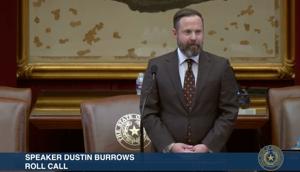
After two weeks fleeing Texas, House Democrats return, quorum reached

Trump: Zelenskyy could end Russia-Ukraine war ‘if he wants to’

$750 million facility to protect Texas cattle, wildlife from screwworm threat

Chicago posts fewest homicides since 2016, arrests rate also declines

Three years later, Inflation Reduction Act blamed for higher Medicare costs