
Bipartisan bill would force vote before Social Security cuts hit
A bipartisan group of senators introduced legislation that would fast-track a floor vote on Social Security’s looming insolvency, using an independent board to draft a starting plan Congress could no longer easily ignore.
The Protecting Retirement Opportunities and Maintaining Income Security for Everyone, or PROMISE Act, would direct the Social Security Advisory Board to submit a base bill guaranteeing at least 50 years of solvency. Congress would then be forced to debate, amend and vote on it within 100 hours, bypassing the inaction that has left the retirement trust fund six years from depletion.
Eight senators from both parties are behind the bill: Senate Democratic Whip Dick Durbin, D-Ill., and Sens. Bill Cassidy, R-La., Tim Kaine, D-Va., Thom Tillis, R-N.C., Angus King, I-Maine, John Cornyn, R-Texas, Chris Coons, D-Del., and Alan Armstrong, R-Okla. Three of them – Durbin, Cassidy and Tillis – are leaving the Senate at the end of their terms.
More than 70 million Americans receive Social Security benefits. The 2026 Social Security Board of Trustees report found the retirement trust fund will be depleted in 2032, triggering an automatic 22% cut to benefits – about $450 a month for someone receiving the average benefit of $2,071, according to the senators’ release.
“Here is our chance to agree on a bipartisan process to rescue Social Security this year,” said Durbin. “We were elected to solve problems — and there’s no greater problem than the solvency and future of Social Security.”
The PROMISE Act follows a House effort. Reps. Tom Cole, R-Okla., and Tom Suozzi, D-N.Y., introduced the Bipartisan Social Security Commission Act in June, which would create a 13-member commission to develop a 75-year solvency plan, with its own expedited path to a floor vote if Congress fails to act within three legislative days of receiving the commission’s report.
Maya MacGuineas, president of the Committee for a Responsible Federal Budget, called the bill “a thoughtful bipartisan process to help Congress do its job.”
“Social Security is going to need to collect more revenue, slow projected cost growth, or some combination,” she said. “There’s no magic third alternative that doesn’t involve borrowing hundreds of trillions of dollars and thrusting the country into a debt spiral.”
Anqi Chen, associate director of savings and household finance at the Center for Retirement Research at Boston College, said the PROMISE Act does not itself solve Social Security’s shortfall but could help.
“The PROMISE Act is a process bill, so it does not provide any solutions,” Chen told The Center Square. “Think of it as a teacher setting up interim milestones or check-ins so students don’t wait until the last minute to do their assignment.”
Chen said a 50-year solvency requirement, short of the traditional 75-year standard, is still meaningful given the timeline.
“The Social Security Trust Fund will be depleted in six years,” she said. “A 50-year solvency plan would be a celebrated improvement from no plan.”
Chen said routing the process through the Social Security Advisory Board gives lawmakers a starting point rather than a blank slate.
“This process can hopefully help lawmakers get started,” she said.
A spokesperson for Senate Finance Committee Chairman Mike Crapo, R-Idaho, did not respond to a request for comment by publication time.
Shai Akabas, vice president of economic policy at the Bipartisan Policy Center, said the bill’s forcing mechanism sets it apart from past reform efforts.
“With Social Security’s primary trust fund just six years from depletion – and an automatic 22% benefit cut the legally mandated consequence of inaction – Congress simply cannot afford to keep letting this issue stall,” Akabas told The Center Square. “What makes the PROMISE Act credible is that it doesn’t just ask Congress to act; it changes the procedural calculus to make action harder to avoid.”
Akabas said the bill’s decennial review requirement means the 50-year solvency bar isn’t a ceiling.
“Fifty years of solvency would be a monumental achievement,” he said. “The PROMISE Act also mandates a once-per-decade solvency review, with the same fast-track procedure triggered automatically if future shortfalls are projected – so 50 years isn’t a ceiling, it’s a floor.”
AARP and the Alliance for Retired Americans, two advocacy groups representing older Americans, did not respond to requests for comment by publication time.
Three of the bill’s sponsors will not be in the Senate to see whether it succeeds.






Chance Showers And Thunderstorms
Latest News Stories

South Carolinian facing charges for threatening Trump will stay jailed

Iran testing fragile ceasefire, fires on Navy, commercial ships

Small businesses expected to feel pinch as diesel hits $6 a gallon

GOP senators renew calls to nuke filibuster after voter ID bill languishes

Illinois Quick Hits: Four charged in alleged pharmacy burglary conspiracy

LA City Council member seeks to allow noncitizens to vote

Chicago loses 2,100 restaurant jobs as industry fights mandated wage hikes

State Senator, ‘angel parent’ want to let police work with ICE
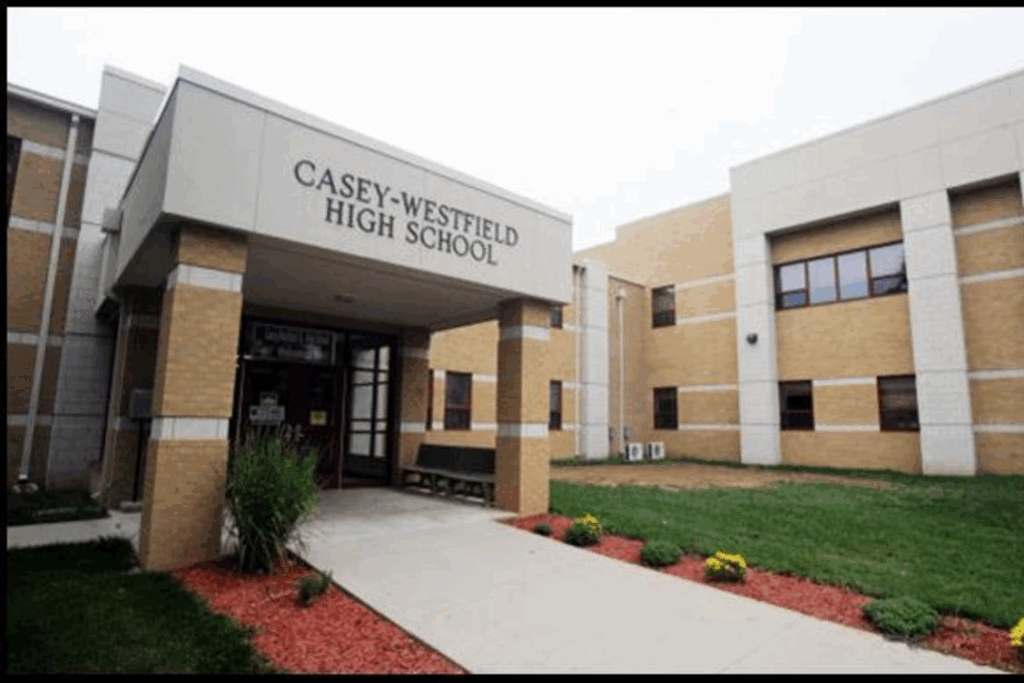
Meeting Summary and Briefs: Casey-Westfield Board of Education for April 20, 2026

U.S. Supreme Court temporarily allows mail-order abortion pills

U.S. Supreme Court declines to hear Washington COVID-19 speech case

‘Project Freedom’ begins, two ships safely transit Strait of Hormuz