
Blanche touts crime record, defends Epstein files handling
Todd Blanche, President Donald Trump’s nominee for attorney general, on Wednesday touted the U.S. Department of Justice’s record in reducing crime and defended his handling of documents related to convicted sex offender Jeffrey Epstein.
Lawmakers on the Senate Judiciary Committee praised and grilled Blanche on Wednesday as he seeks to be confirmed to the attorney general post. He has served as acting attorney general since April, after Pam Bondi was removed.
Blanche opened his testimony touting lower crime rates under the Department of Justice. He said the nationwide murder rate is down 20%, the lowest since 1900. He said the department has focused on arresting more violent criminals, making more than 5,000 arrests of child predators and human traffickers.
Blanche also highlighted the administration’s efforts to crack down on crime in Washington, D.C., and Memphis. He said the department has arrested thousands of criminals from both cities and has prosecuted more individuals who illegally crossed the U.S.-Mexico border.
“That is what happens when we fight crime together, and I want to bring that model that we’ve done in a few towns to more communities in every state,” Blanche said. “Above all, we are restoring American trust.”
Sen. Chuck Grassley, R-Iowa, praised Blanche and the Department of Justice for its efforts to reduce crime. He highlighted the department’s record in arresting human traffickers and uncovering missing children.
“This department is keeping Americans safe, and the numbers back that up,” Grassley said. “Mr. Blanche, you should take pride in delivering the law enforcement promise the American people voted for in 2024.”
Senators also grilled Blanche on the Department of Justice’s release of documents associated with Epstein. Sen. Dick Durbin, D-Ill., brought up allegations that the department improperly redacted documents and refused to meet with victims of Epstein.
In a tense exchange, Blanche said the Trump administration has been the most transparent in regards to documents associated with Epstein, releasing roughly 3 million documents. He said redactions were made to certain documents to protect victims’ personal information.
“The reviewers were qualified, experienced attorneys within the department and the FBI – they took pains to apply appropriate redactions,” Blanche said. “There were mistakes that were made, and so approximately 1% of the redactions had to be fixed after we released the Epstein files.”
Blanche emphasized that lawmakers can meet with prosecutors at the Department of Justice about any other concerns over redacted documents. He pointed to visits from Reps. Ro Khanna, D-Calif., and Thomas Massie, R-Ky., that resulted in a removal of redactions from several documents.
Blanche also criticized the Biden administration’s efforts on the release of documents associated with Epstein.
“The Biden administration did nothing to be transparent about the Epstein case. We have been extraordinarily transparent in not only producing the records but letting unredacted versions be available to anybody in this body,” Blanche said.
Durbin grilled Blanche over whether he would meet with several victims of Epstein’s crimes. Blanche pointed out that he would not be allowed to meet with the victims due to the ongoing nature of litigation in the case against Epstein and his associates.
Attorneys, like Blanche, are not able to meet with clients of another attorney. Instead, Blanche would be able to meet with the attorney’s of an Epstein victim.
“Any victim, if they’re here today, I would encourage them to, or their lawyers, to meet with the FBI. We will 100% investigate. There are no closed investigations,” Blanche said. “If we learn today, if we learn next week, if we learn next month that there’s an individual that we can investigate, indict, and prosecute out of the Epstein files, you better believe we will.”
Sen. John Cornyn, R-Texas, questioned Blanche over the Department of Justice’s nearly $1.8 billion “anti-weaponization fund,” an allocation designed to pay victims of political weaponization, potentially including actors who participated in the Jan. 6, 2021, Capitol attack.
The fund came from a settlement in a lawsuit involving Trump, Donald Trump Jr. and Eric Trump, following the leak of their tax returns.
Blanche said the weaponization fund was “moot” because it was not moving forward. Cornyn said parties in the lawsuit that created the fund did not agree to modify the settlement.
Blanche insisted the fund was not moving forward, positing the agreement was unnecessary.
“The weaponization fund is dead, it’s not moving forward,” Blanche said. “No money went from the treasury to any other account. There’s no commissioners. It’s not moving forward.”






Chance Showers And Thunderstorms
Latest News Stories
Europe tried wealth taxes. Most gave up.

Colorado governor shortens Tina Peters’ sentence for election tampering

No ruling; Florida judge hears arguments in redistricting litigation
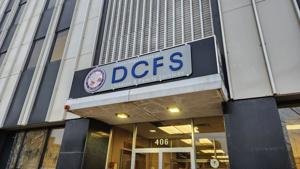
Debate grows over bill on gender, abortion care access in child placement

Lawsuit: D300 secretly gender transitioned student; Seeks to nix IL gender ‘guidance,’ too

WATCH: Family farm’s decade-long water war with Ecology waiting on WA Supreme Court

Casey-Westfield Baseball Powers Past Paris in 10-6 Home Victory
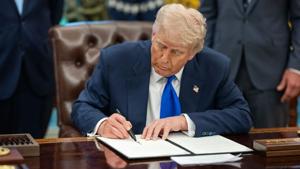
Trump says tariffs never came up during China trip

IL biometric privacy suits say tech companies used broadcasters’ work to train AI

Illinois Quick Hits: Report shows 8% of Cook County offenders on electronic monitoring AWOL

Fed funding of pediatrics group questioned over its gender ideology stance

Trump’s ‘historic’ visit to China yields some economic, less geopolitical fruits