Text messages aren’t ‘phone calls’ that can trigger class actions: Appeals panel
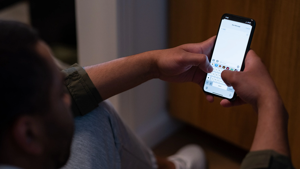
(Legal Newsline) – Text messages aren’t “phone calls,” and can’t be used to bring class action lawsuits against companies for allegedly violating federal telemarketing laws, a federal appeals panel has ruled.
The ruling appeared to deliver a strong win for businesses that have increasingly become targets for the thousands of class action lawsuits filed every year under the federal law known as the Telephone Consumer Protection Act, or TCPA.
And the decision may increase the likelihood that the question may ultimately be answered by the U.S. Supreme Court, observers warned.
A three-judge panel of the U.S. Seventh Circuit Court of Appeals handed down the ruling on July 14.
In the ruling, the judges explicitly declared that the federal TCPA law cannot be interpreted to allow plaintiffs to extend a so-called “private right of action” to plaintiffs to sue businesses for sending marketing text messages, because the law only prohibits “telephone calls,” and not every kind of communication that might be received on today’s mobile phones.
The decision was authored by Seventh Circuit Judge Thomas Kirsch. Judges Nancy Maldonaldo and Doris Pryor concurred in the ruling.
“Congress’s general concern about intrusive telemarketing practices doesn’t necessarily mean that it adopted a broad definition of telephone call,” Kirsch wrote in the panel opinion. “In fact, Congress specifically found that telemarketing calls create a public safety risk when they seize telephone lines needed for emergency or medical assistance.
“Spam text messages don’t pose this risk, making it unsurprising, or at the very least reasonable, that (the TCPA’s) private right of action would cover telephone calls but not messages.
“Repeated, unwanted text messages are undoubtedly a nuisance. But they do not fall within the private right of action created by (the TCPA),” Kirsch wrote.
The decision came as the latest in a case that landed in Peoria federal district court in 2024.
The class action lawsuit was filed by attorney Sergei Lemberg, of Lemberg Law, of Wilton, Connecticut, against Blackstone Medical Services, a Florida company that sells home sleep tests.
The lawsuit was filed on behalf of named plaintiff Seth Steidinger, identified as a resident of Gridley, in McLean County, about 23 miles north of Bloomington. The plaintiffs, however, sought to expand the action to include potentially “thousands” of other plaintiffs under the class action.
The lawsuit specifically accused Blackstone of violating the TCPA by sending unwanted marketing text messages to Steidinger and many others who had placed their phone numbers on the National Do-Not-Call Registry, which had been created under the TCPA.
The lawsuit against Blackstone, however, is just one of thousands of such lawsuits that have been filed in U.S. courts annually under the TCPA.
According to a report published by Compliance Point, for instance, the number of such TCPA class actions have surged in recent years. In 2025, the report said 2,628 TCPA class action lawsuits were filed, an increase of 60% compared to 2024.
Neither that report nor other readily accessible industry data indicated how many of those class actions involved marketing text messages, as opposed to traditional telemarketing phone calls or other messaging.
However, observers generally indicate much of the current surge in TCPA class actions involve claims over allegedly illegal text messaging.
In response to the lawsuit, Blackstone moved to dismiss the action, arguing such lawsuits aren’t permitted under the plain language of the TCPA. Specifically, they argued that the TCPA, which was enacted in 1991, could not have prohibited the use of marketing text messages, when the technology for such messaging had not yet been invented at the time.
In court, judges noted federal regulators have drafted TCPA enforcement rules that lump text messages in with traditional phone calls.
However, in Peoria district court and at the Seventh Circuit, the judges agreed that those regulations don’t control the court’s interpretation of the law. And in this case, they agreed the private right of action given by the TCPA to individual to sue for unwanted telemarketing calls doesn’t also extend to marketing text messages.
The “march of technology,” the judges said, does not justify simply extending the TCPA’s private right of action to “all communications by telephone.”
They noted the TCPA law includes definitions and other language which draws a line between “calls” and “messages.”
And in this case, “Based on how telephone messages were understood at the time of enactment, we conclude that modern-day text messages are better understood as messages, not calls,” Kirsch wrote for the Seventh Circuit panel.
While delivering a win for businesses, the impact of the ruling may be restrained. The ruling is binding only over federal courts in the states of Illinois, Wisconsin and Indiana, which are included in the U.S. Seventh Circuit.
And at least one other court has ruled differently, said observing attorneys from the firm of Duane Morris in a blog post discussing the Seventh Circuit ruling. No attorneys from Duane Morris were involved in the Blackstone TCPA case.
In their blog post, attorneys Gerald L. Maatman Jr., Jennifer A. Riley and Ryan Garippo noted the San Francisco-based U.S. Ninth Circuit Court of Appeals issued a ruling earlier this year that presumed unwanted text messages were no different than unwanted telephone calls for the purposes of TCPA lawsuits.
In that ruling, the Ninth Circuit judges only ruled that businesses couldn’t be sued for sending text messages that included video files.
That key difference in the Seventh and Ninth Circuit decisions “certainly signals a growing methodological division between these two circuits,” the Duane Morris attorneys wrote.
Such differences in opinion on the law among U.S. appeals courts can leave businesses facing different rules and standards, as well as different lawsuit risks, in different parts of the country. Such split opinions can often be addressed by the U.S. Supreme Court.
It is not known if any of the parties will seek to appeal the Seventh Circuit’s ruling to the Supreme Court.
In the meantime, the Duane Morris lawyers warned businesses, however, that they still faced a risk of lawsuits over unwanted text messages, particularly if the messages are sent using automated dialing systems, and businesses could still face the risk of a regulatory action brought by the FCC or state agencies.
Indeed, in their decision, the Seventh Circuit judges specifically stated: “… Spam messages may be curbed through agency action pursuant to other provisions of (the TCPA), which we leave undisturbed.”





Sunny
Latest News Stories

Canadians, Brits stress U.S., Texas are key to shipbuilding

Tariff litigation expands as federal court weighs next move
Democrats dissatisfied by DOJ’s pause on ‘anti-weaponization fund’

Hegseth calls allied defense ‘bad deal for taxpayers’ in budget push
Pritzker touts state spending to cover federal cuts in passed budget

I-95 quintuple fatal: Federal agency subpoenas state of New York
Illinois lawmakers give raises to diversity commissioners they criticized
Report: Credit card debt projected to decrease $61B

Taxpayer risk cited after Bears stadium bill stalls

Illinois Quick Hits: General Assembly approves CTE bill

Amended scooter, e-bike bill heads to governor

Property tax-free Bears deal fails to pass