
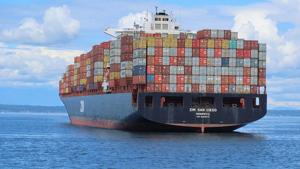
Trump hits 60 nations with forced-labor tariffs
The Trump administration imposed forced-labor tariffs on 60 trading partners Thursday, covering most U.S. imports, but did not say what the duties will cost American consumers.
U.S. Trade Representative Jamieson Greer set a 10% rate for 17 economies that have banned, pledged to ban, or partly restrict forced-labor goods, and 12.5% for most of the rest.
Five partners – the European Union, Taiwan, Japan, South Korea and Switzerland – face 10% or 12.5% on certain products, calculated net of existing tariff rates.
The duties take effect at 12:01 a.m. Friday, hours after the administration’s Section 122 tariffs expire. Goods already in transit before then are exempt through July 28.
Greer framed the tariffs as a human-rights measure.
“Decades of moral suasion have not eradicated forced labor from global supply chains,” he said, calling the action overdue.
Phillip Magness, a senior fellow at the Independent Institute, said the forced-labor tariffs are the latest in a series of fallback options after courts curbed the administration’s earlier tariff authorities.
“The ‘Plan B’ alternatives to IEEPA all have similar effects on importers in that they still apply a tariff with substantial economic burdens,” he told The Center Square. “These alternative strategies only differ in that they have varying degrees of vulnerability to a court challenge.”
The new tariffs carry their own legal risk, he said.
“Any tariff under these clauses that stretches or exceeds the statutory language will probably face legal challenges,” Magness said.
The administration did not estimate what the tariffs will cost American households. The final notice lists exempted products across more than 200 pages of tariff-code line items but attaches no dollar figure or coverage percentage.
Magness said businesses are bracing for future tariffs.
“Many businesses are likely worried about getting hit with additional tariff burdens in the future,” he said.
American businesses paid about $166 billion in tariffs under the International Emergency Economic Powers Act. Those tariffs, which the Supreme Court struck down in February, are in the process of being refunded to the importers who paid them.
A Federal Reserve Bank of New York report, the Kiel Institute for the World Economy, and a Duke University study all concluded that Americans are paying nearly the entire cost of tariffs, not foreign countries as the White House has maintained.
The administration has repeatedly reached for new legal tools to tax imports as courts curbed earlier ones. The Tax Foundation estimated the tariffs cost near $700 per household in 2026. That estimate didn’t include the latest round of tariffs announced Thursday.
In a 6-3 decision Feb. 20, the Supreme Court ruled Trump could not impose tariffs under the International Emergency Economic Powers Act, wiping out his broadest tax authority.
Hours later, he imposed a 10% global tariff under Section 122 of the Trade Act of 1974, only to have a federal trade court strike that down in May as unauthorized by law.
That ruling was stayed on appeal, and the Section 122 tariff expires on its own July 24. Section 301, unlike the other two authorities, has so far withstood court challenges.
The Supreme Court in June declined to hear a challenge to a separate Section 301 action, denying cert in a case testing the USTR’s power to expand existing tariffs.
Trump has used tariffs to try to reorder global trade to give U.S. businesses a home-field advantage. Trump put import duties on every U.S. trading partner in a move to bring back manufacturing jobs lost over several decades to lower-cost countries.




Isolated Rain Showers
Latest News Stories
Shoaff Law LLC

Sarah Bush Lincoln Casey Clinic

Richards Farm Restaurant

Reflections Family Restaurant

Big Things Attractions
Trash Pick a Day Late

Main Street Closed for Candy Canes on Main

Candy Canes On Main Dec 6 & 7, 2024


- « Previous
- 1
- …
- 237
- 238
- 239