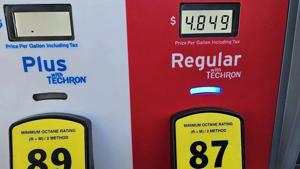
Drivers pay more as gas tops $4 nationwide
The U.S. price of a gallon of regular grade gasoline remained above $4 a gallon for the fifth consecutive day on Friday as escalating Middle East tensions and low domestic oil inventories put downward pressure on American fuel supplies.
The national average reached $4.11 a gallon on Friday, rebounding from a late-June low of $3.91 a gallon after a brief U.S.-Iran memorandum of understanding temporarily reopened the Persian Gulf to ship traffic.
Patrick De Haan, head of petroleum analysis at GasBuddy, said American drivers have never seen such volatility in gasoline prices. “2026 is now the first year ever to reach $4 in two separate surges,” De Haan noted in a post on social media site X. “That didn’t happen in 2008, not in 2022, not ever.”
The Middle East war intensified early Thursday when the Houthis, an Iranian ally that controls most of Yemen, resumed missile and drone attacks on Red Sea shipping lanes, striking two crude tankers.
U.S. President Donald Trump said Thursday that he is considering a major attack on Iran to restore stability in the Middle East. “I am considering a massive attack, bigger than ever before, and we are all set for it,” Trump told Axios in an interview.
The president also announced that the administration plans to use frozen Iranian assets under U.S. control to pay for any future damage to commercial ships and cargo.
The U.S. Central Command confirmed Friday that American forces concluded the 13th consecutive night of precision strikes against Iranian military targets. According to an official statement, the latest attacks targeted command centers, drone storage facilities, communication networks, and coastal surveillance sites used by the Islamic Revolutionary Guard Corps to threaten vessels transiting the Strait of Hormuz.
Recently released Department of Energy data show that the nation’s Strategic Petroleum Reserve dropped by 5.1 million barrels last week to 311.4 million barrels, a 43-year low. The nation’s combined commercial and emergency crude oil inventories sank to the lowest levels since 1984, the data show.
The U.S. Department of Energy has withdrawn about 28.8 million barrels from the strategic reserve over the last five weeks, bringing total drawdowns to more than 104 million barrels since the war with Iran began in late February.
Energy Secretary Chris Wright said in March that under the administration’s price stabilization program, the oil is not being sold but is instead loaned to energy companies, who will later return it to the strategic reserve with a 20% premium.
Amena Bakr, Head of Middle East Energy Insights at Kpler, a maritime intelligence prover, said in a social media post Thursday that the market has moved beyond temporary instability.
“This is no longer just headline volatility,” Bakr posted on X. “Coordinated pressure on both major oil routes, escalating military conflict with no clear path to de-escalation, and direct tanker targeting are creating a structural supply risk. There is no spare capacity that can replace 25% of global supply,” she posted.






Showers And Thunderstorms Likely
Latest News Stories

Illinois quick hits: Quantum facility breaks ground; immigration group responds to raid

Bipartisan senators reintroduce H-1B visa reforms

WATCH: Illinois student struggles continue as enrollments decline

Summer 2025 Graduates Announed

Meeting Summary and Briefs: Lake Land College Board of Trustees for August 18, 2025

Department of Energy returning $13B climate agenda funding to taxpayers

Trump directs war secretary to send troops to Portland to protect ICE
Trump says he won’t back down on Antifa terrorism designation

Exclusive: DOJ ‘weaponization’ victim still in jail, asking for Trump pardon

Champaign stabbing raises concerns over Illinois mental-health law

Lake Land College Invests Over $360,000 in Allied Health Program Technology

Colorado tops nation for millennial migration, report finds