Johnson says Trump tariffs are net positive for Louisiana despite challenges
Some sectors of Louisiana’s economy faced challenges because of the Trump administration’s tariff policy, but House Speaker Mike Johnson said he believes the overall impact has been positive because it corrected what he described as trade disparities.
The administration turned to Section 301 of the Trade Act of 1974 for authority to impose new tariffs, according to a White House memorandum. The U.S. Supreme Court had ruled earlier this year that the president could not impose tariffs under the International Emergency Economic Powers Act.
This month, the administration announced tariffs on imports from 60 economies, the memorandum said.
“I think the trade disparity was a big priority for the president when he came into office and took over,” Johnson, a Republican from Louisiana, said of second-term Republican President Donald Trump at an event in Bossier City on Monday. “He campaigned on it, and he did reset the table, so to speak. Many countries have been taking advantage of Americans for a long time, and we reversed that now.”
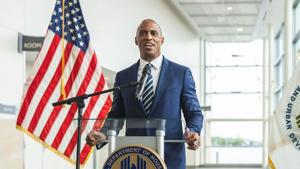
Johnson was in north Louisiana to announce a $25 million Department of Transportation grant to the Bossier Parish East-West Corridor Project and $640,000 to the Louisiana Department of Transportation and Development for the interstate corridor truck parking study.
“We are so happy about good things that happen in Louisiana,” Johnson said. “Our economic statistics in the second quarter are very encouraging.”
Johnson said the state is among the leaders in the South for economic growth, citing gains in jobs, gross domestic product and expanded opportunities across industries such as construction, healthcare and manufacturing.
Johnson said Trump is going to push for policies that make sense for Louisiana, a state experiencing growth in industrial data centers, energy infrastructure expansion and a shipbuilding renaissance – all requiring more steel, copper and other construction materials.
“On balance, it’s been a great thing,” he said. “Now, in some sectors of the economy, it’s increased some of the challenges. I met this morning, for example, with many of you from our ag community in our rural areas of the state.
“Many different commodities, different prices, have had different challenges from trade disparities, and that kind of thing. I think all that’s settling out as we go into this election cycle, and we go through the beginning of the third quarter of this important year.”
Johnson said, “You can’t argue with the fact that we got much more fair trade agreements with so many countries around the world, and that’s going to benefit America in the long run. So it’s been a bumpy road in some respects, but I think overall it’s going to be a good thing” for the state.



Mostly Sunny
Latest News Stories
Desmond, Wilpert ahead in District 48 race to succeed Issa

Candidates advance in redrawn congressional districts
Illinois slaps limits on non-lawyer investor power in law firms
Law firm: California’s gender policies violate Constitution

Group challenges gender policies in New Mexico schools

Supreme Court rules for Texas in Rio Grande River lawsuit
Trump appoints housing regulator as acting spy chief

Mullin defends $118B Homeland Security budget request

Bill loosens in-state tuition requirements

Illinois Quick Hits: Nine arrested during Naperville teen gathering
Rubio provides few answers to Congress on Iran conflict timeline

Pritzker housing proposal partly stalls amid overreach concerns from localities