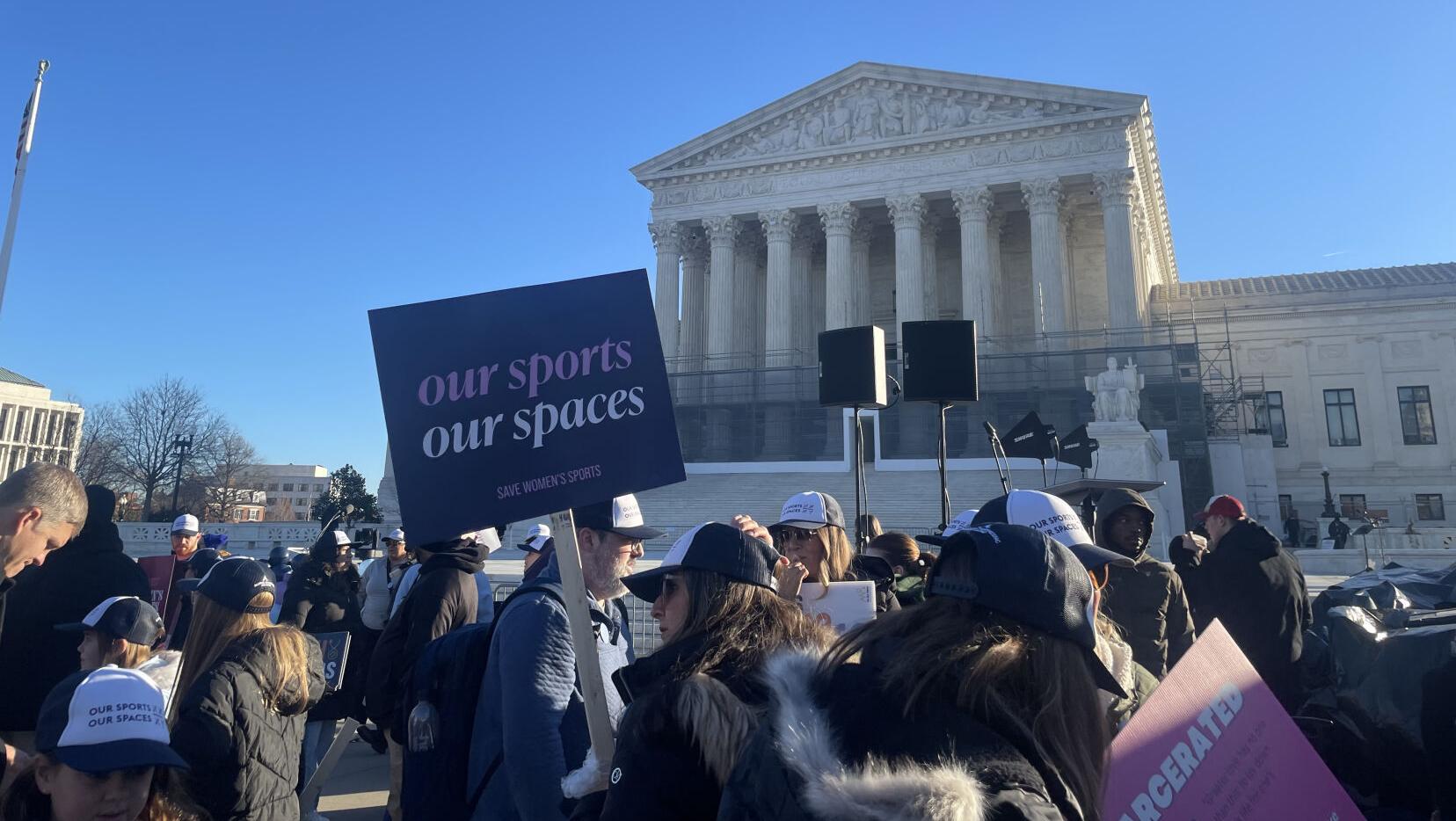
Arizona senator optimistic after U.S. Supreme Court debate
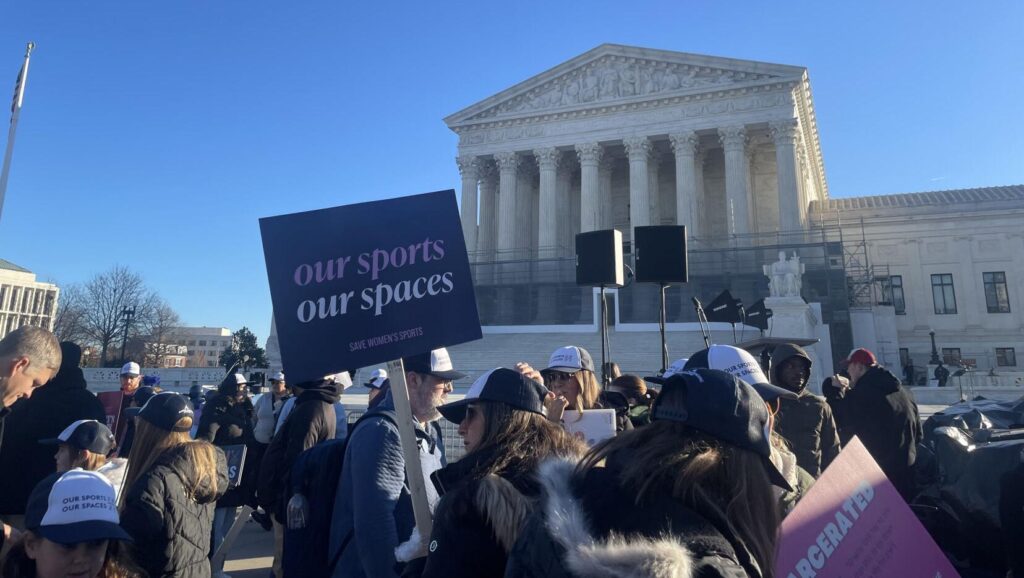
Arizona Senate President Warren Petersen was at the U.S. Supreme Court when oral arguments were heard on whether transgender athletes may participate in girls’ and women’s school sports.
Afterward, Petersen, R-Gilbert, expressed confidence that justices would rule in favor of Idaho and West Virginia’s laws banning transgender athletes from those sports.
A U.S. Supreme Court ruling could set the stage for a lower court ruling on a similar ban in Arizona in another case.
The Republican majority in the Arizona Legislature filed amicus briefs in support of Idaho and West Virginia.
“I’m optimistic based off of what I heard,” the Senate president told The Center Square. “We’re going to win this thing.”
The court heard oral arguments Tuesday in Little v. Hecox and B.P.J. v. West Virginia. Little v. Hecox concerns a law Idaho passed in March 2020 that prohibits transgender athletes from competing in girls’ and women’s sports.
A month later, after the Fairness in Women’s Sports Act became law, Lindsay Hecox, a transgender athlete who identifies as a female, and Jane Doe, a cisgender high school athlete, filed a lawsuit against the law, saying it violated the 14th Amendment’s Equal Protection Clause and Title IX.
B.P.J. v. West Virginia deals with a law the state passed in 2022 that requires biological males to compete only on biological male sport teams.
Becky Pepper-Jackson, an 11-year-old transgender person who identifies as a female, challenged the law, claiming it infringed the 14th Amendment’s Equal Protection Clause and Title IX.
After the oral arguments in the two cases, Petersen said it was “fascinating” and an “amazing experience” to be “in the Supreme Court with the justices” and the two solictors general – the attorneys representing Idaho and West Virginia.
The Senate president told The Center Square four justices were in support of Idaho and West Virginia and three oppose the states. He said he sees Neil Gorsuch and Amy Coney Barrett, both appointed by President Donald Trump, as the swing votes.
Petersen predicted the Supreme Court would ultimately rule 6-3 in favor of Idaho and West Virginia. The court has a six-member conservative majority.
The Supreme Court rulings are expected sometime in June, he added.
The justices’ decisions will have massive implications, Petersen told The Center Square.
If the court rules against the states, girls will “have nowhere to go where they can lead and dominate in sports,” he said.
If the Supreme Court rules in favor of Idaho and West Virginia, only biological males can only play in male sports in those states.
The Supreme Court’s decision will also affect a law Arizona passed in 2022 called the Save Women’s Sports Act, which prevented transgender athletes from competing in women’s sports. This law has been challenged and is currently before the Supreme Court.
The court set Arizona’s case aside to hear these two cases, Petersen said. He added justices will remand Arizona’s case back to a lower court after the U.S. Supreme Court ruling on the Idaho and West Virginia cases.
If the lower court then ruled against the Arizona Legislature, Petersen said it would be appealed back up to the Supreme Court.
Arizona Attorney General Kris Mayes, a Democrat, did not defend the state’s law when it was challenged in 2023. The plaintiffs in the case said it violated the same things as the two court cases in which the court heard oral arguments..
“Sadly, it appears that she is OK with boys playing in girls’ sports. She’s sympathizing with biological males playing in girls’ sports,” Petersen said, referring to Mayes.
After Mayes decided not to defend the law, it fell to Petersen and former state House Speaker Ben Toma, R-Peoria, to represent Arizona.
Current House Speaker Steve Montenegro, R-Surprise, said women’s sports exist due to biological differences.
“Arizona lawmakers passed the Save Women’s Sports Act to preserve fair competition for girls. When Attorney General Mayes refused to defend that law, the Legislature stepped in,” Montenegro said.
“Courts should not erase reality or take opportunities away from female athletes through judicial decree,” he added.
According to Petersen, the Supreme Court could issue three possible rulings.
The first one is that the Court upholds state laws banning biological males from competing in female sports. The second option would be to send this question to the states and let them decide, and the third would be to repeal state laws preventing males from participating in female sports.
If the Supreme Court rules against Idaho and West Virginia in these cases, Petersen told The Center Square that Arizona’s law would be struck down as well.
However, he said he did not think this would happen.





Partly Sunny then Isolated Rain Showers
Latest News Stories
Lawmakers request DOJ probe into whether Somali fraud and ICE protests are linked

Questions remain on Trump’s plans for $2,000 tariff rebate checks

Illinois Quick Hits: EPA offers grants to public water facilities

Victims, families support bill protecting victims of sexual assault in schools
Retired military officials warn CMS bidding expansion poses national security risks

Lobbyist: Passenger rail planning bill has no fiscal impact this year

U.S. Supreme Court appears skeptical of drug user gun ban

Illinois job market stalls, more than 300,00 left looking for work

Poll: 47% of U.S. voters oppose bombing Iran
WATCH/EXCLUSIVE: Title IX debate continues with Supreme Court decision pending
Illinois diversity commissioner did not properly disclose $23K side job

DOJ indicts 30 more in St. Paul church protest case