House GOP leaders face pushback from own members on funding bill
As the federal government enters its third day of a partial shutdown, House Republicans are bickering over Senate changes to the $1.2 trillion funding package, jeopardizing the upcoming vote.
The Senate-passed package includes five of the six remaining appropriations bills – funding State-Foreign Affairs, Financial Services, Defense, Labor-HHS-Education, and Transportation-HUD – and a short-term Continuing Resolution in place of the Homeland Security bill.
But that deal, brokered by Senate party leaders and the White House, received no input from either party in the House, and many lawmakers on both sides are taking issue with it.
The CR will freeze DHS funding at current levels for the next two weeks. During that time, lawmakers will restructure the House-passed Homeland Security bill to appease Democrats’ demands for immigration reform.
Those include barring agents from wearing masks, requiring body-worn cameras, and implementing stricter warrant requirements, among other changes.
Dozens of House Republicans, represented by the House Freedom Caucus, are vehemently rejecting such a plan, arguing it will cripple immigration enforcement efforts.
“We are not going to let Chuck Schumer defund Homeland Security to protect criminal illegal aliens,” the lawmakers said in a statement. “One way or another, we will make sure that ICE, Border Patrol, FEMA, TSA, Coast Guard, Secret Service, etc. get the funding they need.”
The planned changes to the Homeland Security bill are not the only Republican holdup, however.
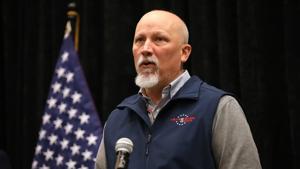
Republicans have a one-vote margin in the House, and three Republican House members – Reps. Anna Paulina Luna, R-Fla.; Tim Burchett, R-Tenn.; and Chip Roy, R-Texas; – are insisting that the appropriations bill include the SAVE Act.
The bill, widely popular with Republicans but decried by Democrats, would mandate voters present identification at the polls.
But if the SAVE Act amendment passes, the entire funding package would have to return to the Senate for approval. The legislation would be “dead on arrival,” Senate Majority Leader Chuck Schumer, D-N.Y., said.
“House Republicans shouldn’t let Schumer dictate the terms of government funding,” Burlison fired back Monday. “If Dems want to play games, no spending package should come out of the House without the SAVE Act attached—securing American elections must be a non-negotiable.”
Before the package can even make it to the House floor for a vote, the House Rules Committee must pass it. Republican leaders are hoping the committee can do so Monday night, enabling a vote as soon as Tuesday.
President Donald Trump said he supported the measure and didn’t want delays or changes.
“We need to get the Government open, and I hope all Republicans and Democrats will join me in supporting this Bill, and send it to my desk WITHOUT DELAY,” Trump wrote in a social media post. “There can be NO CHANGES at this time. We will work together in good faith to address the issues that have been raised, but we cannot have another long, pointless, and destructive Shutdown that will hurt our Country so badly — One that will not benefit Republicans or Democrats.”






Slight Chance Rain Showers then Mostly Sunny
Latest News Stories

Poll: Democrats hold slight edge over Rogers in Michigan U.S. Senate race

Swipe fee battle continues after delay, court ruling

Walz appoints members to Operation Metro Surge ‘Truth Council’

$45M included in budget for previously unfunded property tax relief

Over one ton of cocaine seized at U.S.-Mexico tunnel bust

National security group urges Congress to investigate Airwallex ties to CCP

Open primary system debated as Californians go to polls

Illinois Quick Hits: Pritzker signs two bills

Elon Poll says 2 in 3 proud to be American and Signers would be disappointed

U.S. Supreme Court denies Florida request to sue over immigrant CDLs

Judge says federal rule blocks Illinois from banning ‘swipe fees’

Canadians, Brits stress U.S., Texas are key to shipbuilding

Tariff litigation expands as federal court weighs next move
Democrats dissatisfied by DOJ’s pause on ‘anti-weaponization fund’